“Thanksgiving” in the Bible

Share:

Thanksgiving in the Bible

The Bible uses the word “thanksgiving” only 25 times (in the NIV), although you will find many other instances with the base word “thank.”

How the Bible Refers to Thanksgiving

Below is a recap of the 25 uses of the word “thanksgiving” with the Scripture references provided:

In the Bible “thanksgiving” is not about a meal with all the trimmings in which we indulge, although there was a “fellowship offering of thanksgiving” (Lev. 7:13,15) in the Old Testament and a “cup of thanksgiving” in the New Testament of Jesus’ blood shed on our behalf. (1 Cor. 10:16)

“Thanksgiving,” in the Bible, is not a holiday celebration, although joyful singing, shouting, and praising God accompanies it. (Ezra 3:11; Neh. 11:17; 12:8; 12:24, 27, 46; Ps. 42:4; 69:30; 95:2; 147:7; Isa. 51:3; Jer. 30:19; Jonah 2:9)

The biblical use of “thanksgiving” is not a once a year occurrence but rather a regular expression of praise to God, a way of life. (Eph. 5:4; Phil. 4:6)

In the Bible “thanksgiving” is not merely sitting around saying what you are thankful for but also being used by God to cause others to overflow in thanksgiving.  (1 Cor. 14:16; 2 Cor. 4:15; 9:11)

Nor does the Bible describe “thanksgiving” as mere expressions of thanks for what or who you are glad for but rather is to be made for everyone and everything.  (1 Tim. 2:1; 4:3-4)

The Bible does not describe “thanksgiving” as a time to get together with family and friends but even better an opportunity to go into the presence of the Almighty God.  (Ps. 95:2; 100:4)

The holiday rendition of “Thanksgiving” has merit but falls short of the biblical use of the word.  Let’s remember to give thanks at all times (Eph. 5:20) and in all circumstances (1 Thess. 5:18).  And let’s remember to top the list of that for which we are grateful with Jesus.  — “Thanks be to God for his indescribable gift!” (2 Cor. 9:15)

How interesting that the Greek word for “thanksgiving” is “eucharistia” from which we get the word “eucharist” which is used of communion wherein the bread and wine remind us of that indescribable gift.

To help you, or those in your sphere of ministry, reflect on Thanksgiving beyond this once a year, one-day holiday, check out the Holiday Reflections Discipleship Guides. (This resource includes guides for thirteen other holidays.)

Share:

Demonstration of Love Driven by Hate?

Share:

Yes, we have a God of love, but there are some things He hates.

For I, the LORD, love justice; I hate robbery and iniquity.  (Isa. 61:8)

There are six things the LORD hates, seven that are detestable to him: haughty eyes, a lying tongue, hands that shed innocent blood, a heart that devises wicked schemes, feet that are quick to rush into evil, a false witness who pours out lies and a man who stirs up dissension among brothers.   (Prov. 6:16-19)

The LORD detests differing weights, and dishonest scales do not please him. (Prov. 20:23)

Demonstration of God’s Love Must Be Driven by the Fullness of Who He Is

Though a God of love, He is also a holy and righteous God so He can’t help but hate sin.  Consequently there is a barrier between sinful man and God.  Sin separates us from Him “for the wages of sin is death” (Rom. 6:23).

God hates sin so much, He had to do something about it because He also loves so much.

Demonstration of Love in Sending Jesus to Die for Us
But God demonstrates his own love for us in this: While we were still sinners, Christ died for us. (Rom. 5:8)

Praise God, He took care of the sin problem!  He hates sin so much it drove Him to the greatest demonstration of love — “Greater love has no one than this, that he lay down his life for his friends” (Jn. 15:13).

How Such Love Affects Us

What about our love for Him?  Do we love the Lord enough to hate what He hates?

Let those who love the LORD hate evil. (Ps. 97:10)

To fear the LORD is to hate evil. (Prov. 8:13)

Love must be sincere. Hate what is evil; cling to what is good. (Rom. 12:9)

For More About God, Go To: Theology Resources

Share:

God’s Grace

Share:

God's Grace Abounds
The more we grasp the significance of God’s grace, the more we understand its power to make a difference in our own lives, relationships, and ministry.

An Acrostic to Help Us Think Through God’s Grace

The following acrostic using the word GRACE gives fives aspects of this powerful trait and suggests its implications.

God

. . . It’s about what God does, not me.  (Rom. 11:6; 1 Cor. 15:10; 2 Cor. 12:9; Eph. 2:8-9)  — So, let’s give Him the credit.

Reaching

. . . It’s about God initiating the reconciliation of people to Himself.  (Jn. 1:14; 2 Cor. 8:9)  — So, let’s first pray for people and then reach out in ministry.

Abounding

. . . It’s about God giving us more than we could ever expect or deserve.  (Jn. 1:16; Rom. 5:17; 2 Cor. 9:8; Eph. 2:7; 1 Tim. 1:14)  — So, let’s let God be God and not limit what He may want to do in and through us.

Caring

. . . It’s about God loving us enough to send Jesus to die in our place as a sacrifice.  (Eph. 1:7; 2 Thess. 2:16)  — So, let’s love others as He loves.

Eternally

. . . It’s about God’s unending, unconditional acceptance of us in Christ Jesus.  (Eph. 1:6; 2 Tim. 1:9; Titus 3:7)  — So, let’s consistently and persistently rely on His grace to see us through.

You may also be interested in: The Grace of God, His Power for the Church

God’s grace is just one of His many attributes we need to grasp. For alphabetical listings about who God is and what He does for us, check out the Our Great God from A to Z Discipleship Tool Download.

Share:

Easter Points to the Grace of God

Share:

God has always been a God of grace but Easter highlights that trait. Easter points to the grace of God. —

This grace was given us in Christ Jesus before the beginning of time, but it has now been revealed through the appearing of our Savior, Christ Jesus, who has destroyed death and has brought life and immortality to light through the gospel. (2 Tim. 1:9-10)

Grace cost Jesus His life but it is free to us. It is a gift.  If grace was earned in any way, then it would no longer be grace.  (Rom. 5:15; 11:6; Eph. 1:6; 2:8-9; Gal. 2:21)

Easter Points to the Grace of God Available for Us Beyond Salvation

Easter Points to the Grace of God Available for Us Beyond Salvation

Easter reminds us that “For it is by grace you have been saved, through faith-and this not from yourselves, it is the gift of God” (Eph. 2:8). But, Easter grace not only saves us.  It enables us to walk the walk, as seen in Colossians 2:6, NASB, — “Therefore as you have received Christ Jesus the Lord, so walk in Him.”

We receive grace upon grace, even after we are saved.  Grace goes beyond the impartation of life because of Easter.

  1. Easter Grace continues by blessing. (Jn. 1:16)
  2. Easter Grace continues by giving.  (2 Cor. 8:7-9)
  3. Easter Grace continues by forgiving.  (Eph. 1:7)
  4. Easter Grace continues by empowering.  (Rom. 12:6; 1 Cor. 15:10; 2 Cor. 9:8; 12:9; 1 Pet. 4:10)
  5. Easter Grace continues by encouraging.  (2 Thess. 2:16)
  6. Easter Grace continues by strengthening.  (Heb. 13:9)
  7. Easter Grace continues by teaching and motivating.  (Titus 2:11-12)
These realities teach us that grace compliments, rather than cheapens truth.  Jesus came full of both grace and truth (Jn. 1:14).  We are not talking about licentiousness. (Rom. 6:1, 15)  Grace reigns through righteousness.  (Rom. 5:20-21)  We are talking about looking to God to do for us what we cannot do for ourselves.
Easter grace is something we need to better understand so we grab hold of it more fully.  May we “grow in the grace and knowledge of our Lord and Savior Jesus Christ. To him be glory both now and forever! Amen” (2 Pet. 3:18).

Grace is just one of God’s many attributes. Check out the Our Great God from A to Z Discipleship Tool Download for alphabetical renderings about who God is and what He does for us.

Looking for Curriculum for Teaching Over the Easter Season? Go To: Bible Lessons for Easter

Share:

Easter Points to the Love of God

Share:

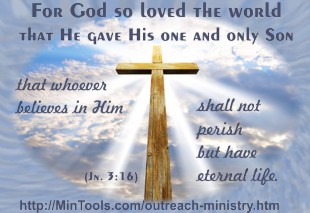
Easter Points to the Love of God for God So Love the WorldEaster points to the love of God, demonstrated by sending Jesus to die in our place.

For God so loved the world that he gave his one and only Son, that whoever believes in him shall not perish but have eternal life. (Jn. 3:16)

Ways Easter Points to the Love of God

Easter defines love.

This is how we know what love is: Jesus Christ laid down his life for us. And we ought to lay down our lives for our brothers. (1 Jn. 3:16)  For God so loved the world that he gave his one and only Son … (Jn. 3:16)

Easter demonstrates God’s love.

But God demonstrates his own love for us in this: While we were still sinners, Christ died for us. (Rom. 5:8)  This is how God showed his love among us: He sent his one and only Son into the world that we might live through him. (1 Jn. 4:9-10) 

Easter epitomizes love.

Greater love has no one than this, that he lay down his life for his friends. (Jn. 15:13)

Easter enables us to love.

We love because he first loved us. (1 Jn. 4:19). And live a life of love, just as Christ loved us and gave himself up for us as a fragrant offering and sacrifice to God. (Eph. 5:2)

What We Can Learn About Love Because of Easter

Easter teach us that love . . .

  1. sacrifices for another.
  2. gives to others.
  3. wants the best for others.
  4. does not wait for someone else to take the first step.
  5. reaches out unconditionally, even to the seemingly unlovable.

“And I pray that you, being rooted and established in love, may have power, together with all the saints, to grasp how wide and long and high and deep is the love of Christ, and to know this love that surpasses knowledge-that you may be filled to the measure of all the fullness of God.”  (Eph. 3:17-19)

Love is a very important aspect of God’s being but so are His other attributes. Get help looking at the sum total of who He is using the Our Great God from A to Z Discipleship Tool Download.

Looking for Curriculum for Teaching Over the Easter Season? Go To: Bible Lessons for Easter – A Real Act of Love

Share: