Bible Teaching That Communicates God’s Words

Share:

Bible Teaching That Communicates the Authoritative Word of God
Do you truly realize what happens when we teach Scripture?

In Bible teaching, we’re handling and sharing with others, the words of an Almighty God, the Creator of the universe, the Sustainer of life, the all-knowing, all-powerful, always wise and sovereign King of kings and Lord of lords.

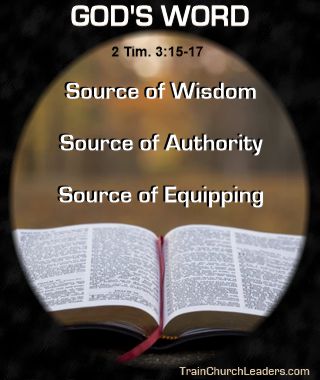
Scripture describes itself as penned by human writers, but “men spoke from God as they were carried along by the Holy Spirit” (2 Pet. 1:21). We also read that “all Scripture is God breathed” which makes it so useful to thoroughly equip us for every good deed (2 Tim. 3:16-17).

No other book has the same authoritative base because of its Author … an absolute standard to live by. No other book has as much power to change lives because of its Author … a relevant standard to live by. — What an awesome privilege and responsibility we have in teaching God’s Word to others.

Implications for Teachers and Leaders for Bible Teaching

Bible teachers, the first question to ask is if you truly believe this to be true. If so, you will then treat God’s Word as unique and more important than any other book. You will take great care to “rightly divide” it (2 Tim. 2:15) and then you will confidently and enthusiastically present a Lesson Worth Teaching.

Church leaders, you also need to ask if you truly believe in the Bible’s authoritative base. If so, you will see the importance of making Bible teachers training a priority to equip teachers to effectively teach the Word of God. (The TrainBibleTeachers.com site can help you think through this process.) Also, if you truly believe in the Bible’s authoritative base, you will seek to align what you say and do with Scripture. (The TrainChurchLeaders.com Practicum seeks to look at various leadership tasks and responsibilities through the grid of God’s Word.)

Share:

Results of Making Christian Nurture a Priority

Share:

God established the home as the primary nurturing ground early on in the Bible. Parents were to make sure God’s commands were first in their own hearts and then impress them on their children (Deut. 6:4-9). Yet, God also wants His Church, believers of all ages, to be teaching one another (Col. 3:16). And, He gifted people to make sure it happens in the Church as “Christ himself gave the apostles, the prophets, the evangelists, the pastors and teachers, to equip his people so that the body of Christ may be built up” (Eph. 4:11-12). As we read on in Ephesians 4, we learn the results of making Christian nurture a priority.

3 Results of Making Christian Nurture a Priority in the Church According to Ephesians 4:11-15

1) It leads to spiritual maturity.

until we all reach unity in the faith and in the knowledge of the Son of God and become mature, attaining to the whole measure of the fullness of Christ. (Eph. 4:13)

2) It helps us acquire discernment.

Then we will no longer be infants, tossed back and forth by the waves, and blown here and there by every wind of teaching and by the cunning and craftiness of people in their deceitful scheming. (Eph. 4:14)

3) It culminates in church growth.

Instead, speaking the truth in love, we will grow to become in every respect the mature body of him who is the head, that is, Christ. (Eph. 4:15)

Results of Making Christian Nurture a Priority in Church Purpose Ministry Manual
The Church Purpose Ministry Manual considers Christian nurture as one of the ways we fulfill our primary purpose to love God with all of who we are. It lists the three results in this post along with two more important results of making nurture a priority.

Learn More: Resources for Bible Teaching Ministry

Share:

Devotion to God’s Word Makes Sense If . . .

Share:

Devotion to God's Word

In a previous post we looked at three requirements to be devoted to the Truth of God’s Word which included . . .
— a proper view of the authority of God’s Word
— a proper view of the commission to teach God’s Word
— a proper view of human tendencies to become distracted

In this post, we will consider what should be the greatest motivation for devotion to God’s Word — a proper view of the God of the Bible.

Being Devoted to the Word Makes Sense If We View God for Who He Is

A God who is perceived as all-knowing, all-powerful, and always faithful is Someone whose words should hold weight in our hearts and minds.  Why would we not want to tenaciously cling to what this kind of God says?  Devotion to God’s Word makes sense with this kind of Author.

Remove the “all” and “always” and you have an anemic God.  Why would we devote ourselves to learning and following the words of that kind of God?  It just wouldn’t make sense if we didn’t know for sure what is true and what isn’t and whether or not He could or would follow through on what He said.

  1. Is the God of Scripture all-knowing?

A God who is not omniscient could make mistakes in the content of His Word.  Only a God who knows the beginning from the end could put together a consistently accurate and cohesive book written over the course of time through the instrument of multiple human authors (Heb. 1:1).

  1. Is the God of Scripture all-powerful?

A God who is not omnipotent could fail to back up all that is written in the Word.  Only a God who can do all things is capable of fulfilling the “desire and achieve the purpose” for which it was given (Isa. 55:11).

  1. Is the God of Scripture always faithful?

A God who is not always faithful might not keep His Word because He could change His mind or have a bad day.  Only a God who is always faithful can be considered trustworthy (Ps. 111:7-8; Heb. 10:23).

How we view the God of Scripture has to make a difference in our level of devotion to His Word.  The greater we perceive Him to be, the more likely we will be to adhere to His Word.

Likewise, how we present this God to others will help motivate them to believe and act on His Word.  The more we present to them a God who is big enough, great enough, powerful enough, and wise enough to have the final word, the more likely they will be to make His Word the final authority in their lives.

Share:

What Happened to Devotion to the Word?

Share:

The early church devoted themselves to the apostles’ teaching, actively living it out in genuine worship, prayer, fellowship, and benevolence toward others.  The result?  — They saw growth.

They devoted themselves to the apostles’ teaching, . . . And the Lord added to their number daily those who were being saved.  (Acts 2:42-47)

Devotion to God's Word
We have God’s Word, which contains the Apostles’ teaching. Does the church today maintain such devotion to Truth? Or, have we replaced it with pragmatism, determined by our experiences, and based on our feelings?

Devotion to truth becomes more difficult when seen as relative for it constantly changes. Remaining steadfast in Truth, despite what is happening in society around us, isn’t always easy but it is essential to living out God’s purpose for the church and our individual lives.

What is required for such devotion to the Word?

  • We need to view the Word as our primary source of truth and equipping (2 Tim. 3:16-17). We can learn from a variety of sources but when devoted to the teaching of God’s Word, we filter everything through Scripture.  God’s Word becomes our grid.
  • We need to take seriously Jesus’ Great Commission that not only says to go and make disciples but also to teach “everything” He commanded (Matt. 28:19-20).  Being relevant in today’s world does not mean abandoning Truth.
  • We need to do our best to deal with hindrances to a wholehearted devotion to it, in our own lives and in the lives of those to whom we minister (2 Cor. 10:5).

For Bible teachers, it might mean doing our best to minimize distractions to the teaching of God’s Word.

For church leadership, it might mean working through programming and scheduling issues to maximize the time we can devote to God’s Word.

In discipleship relationships, it might mean helping people learn to process life through God’s Word and not according to feelings or circumstances.

In counseling or mentoring situations, it might mean helping people deal with fears and anxieties that could supplant time and attention that should go to sitting at Jesus’ feet, listening to His Word.

What will it take for you to maintain devotion to God’s Word in your sphere of ministry?

For More About God’s Word & Help Studying It:  Bible Study Resources Page

Share:

If the Bible is God’s Word, Then What?

Share:


Perception of Bible as God's WordA previous post listed results from a Barna report on how young people today view the Bible differently from other generations.  The fifth point was that they have . . . LESS ENGAGEMENT.

If the Bible is God’s Word, then we should want to be reading and studying the Bible.

If the Bible is not God’s Word, then it doesn’t need to be a priority in our lives.

Failing to engage oneself with God’s Word betrays people’s true heart toward it.  Either they don’t believe it to be true or to be from God or they don’t understand its eternal benefit.  Previous posts looked at its sacredness, accuracy, uniqueness, and origins. Let’s therefore consider some of the benefits:

revives our souls (Ps. 19:7)
makes us wise  (Ps. 19:7)
gives us joy (Ps. 19:8)
helps us see clearly (Ps. 19:8)
prevents us from sinning  (Ps. 119:11)
equips us for good works (2 Tim. 3:16-17)

The reason Scripture is so powerful and life-changing is because of its source.  God-breathed words impart energy, strength, wisdom, joy, light, comfort, peace, grace, and so much more into our lives because HE is all these things.  It’s about Him!

Consistent Bible Engagement Won’t Happen Without the Right Motivation Growing Out of a Belief that it is God’s Word

Have we been communicating the right message of the Bible?

The Bible is about God and His desire to have a relationship with man.  Too often in preaching and teaching we make it about the stories or concepts.  We need to get beyond precepts to the Person.

Have we been communicating the right reason for them to engage?

Give a good reason to study:  not merely something they “should” do … to fulfill a duty, a spiritual discipline;  not merely to learn about the Bible  … to gain knowledge;  but a means of connecting with the living God who loves them and wants their best  … to nurture a relationship.

Have we been communicating the right outcome of engaging in God’s Word?

Will it merely lead to head knowledge or is there more to it?  Have we been showing the life impacting results of God’s Word?  It changes lives.  Here’s a workbook to help teachers work toward this goal:  Teaching for Changed Lives

The last point on the Barna Report is that young people do have a Bible appetite so let’s give them a reason to dig in.

Resources to help communicate how to study the Bible.

Share:

If the Bible is from God, Then What?

Share:

Perception of Bible if It is from GodA previous post listed results from a Barna report on how young people today view the Bible differently from other generations.  The fourth point was that they have a . . . SKEPTICISM OF ORIGINS.

If from God, then its words hold absolute authority and we are accountable.

If not from God but of man, then it words can be ignored and we can choose whether to believe or act upon it without consequence.

Difference It Makes If We Believe the Bible is from God or Some Other Origin

Divine origin changes everything.  By definition, God is the one of whom there is none greater, none higher.  If God authored the Bible, albiet through human writers, then it has supremacy over anything else, including our own opinions and lives.

The Bible describes itself as having divine origin.  Consequently, if that part is a lie, then none of it can be trusted.

2 Timothy 3:16 refers to Scripture as “inspired by God” or “God-breathed”.  Let’s back up: The verse says “ALL Scripture is inspired by God” … all parts.

1 Corinthians 2:11, 13 emphasizes the Spirit’s involvement, stating that it is not from human wisdom.

2 Peter 1:20-21 informs us that men were merely the instruments through whom God spoke.  God spoke by His Spirit.  Man recorded.

If God is not the author, then it would have to have been written by evil men or demons.  Why?  Because the claims within it to be from God would all be lies.  But, the likelihood of evil men or demons writing a book that condemns themselves is unlikely.  So, then, what is the origin of Scripture if not God?

Can we absolutely prove its divine origin?  Probably not, but the evidence sure does stack up for it being from God.

1)  fulfilled prophecies that man could not have made happen
2)  historical facts proven to be true through archaeology
3)  consistent theme and unity throughout the Bible unlikely if sourced by a variety of people
4)  moral excellence of which is unlikely to find its origin in sinful, depraved man
5)  indestructibility of the Bible through the years of which no other book so protected
6)  ability to transform lives

In reality, skepticism of the origin of Scripture could be even deeper.  Perhaps the question is more about God Himself.  Is there a God out there who so loved the world that He left a written manuscript on how to come into a relationship with Him?  Let’s make sure we are answering the underlying questions.  Feel inadequate to answer these difficult questions? — Apologetics Resources

Share: