But My Mother (Father) Abused Me

Share:

Sometimes the people who are supposed to love and care for us the most are the ones who abandon, neglect, or abuse us. The question is asked, “How do I get to the point of being able to forgive those who abused me?”

3 Suggestions for Those Abused by a Parents

I am going to make three suggestions for those abused by a parent. I trust it won’t sound too trite because it’s anything but that. Getting to the point of being able to do these suggestions is monumental when you have suffered at the hand of a parent.

1) Gain a biblical perspective.

God’s command to “honor” our parents comes without qualification. And, His Word specifically warns against scorning them (Prov. 20:20; 28:24; 30:11,17), letting us know that it is destructive for us to do so. Yet, the Bible nowhere tells us to accept abandonment, neglect, or abuse as normal or acceptable. We can “honor” them as our parents without agreeing with them or condoning what they do. Likewise, forgiving someone does not mean we agree with, condone, or even forget what they’ve done. Rather, we are not holding it against them. We are unlikely to honor them if we do not forgive them and vice versa.

2) Transfer your dependence onto the Lord.

Part of the anger and resentment we hold over these kinds of parents comes because we feel betrayed by them, the ones who were supposed to love, care for, and protect us. Accept that your parent may never be what you want or need him/her to be. Rely on the Lord to be there for you, to be the One who will meet your innermost needs. — “Though my father and mother forsake me, the LORD will receive me.” (Ps. 27:10) We will not forgive until we let go of our anger. We will not let go of our anger until we let go of our expectations.

3) Relinquish control to the Lord.

When a parent or other significant adult in our lives has harmed us in some way (physical or emotional), we tend to become self-protective. We are going to do whatever is within our power to shield ourselves. To forgive may seem like you are letting that person win, like you are relinquishing control or power to them. However, by forgiving, you are actually helping yourself become whole. You will not truly heal until you forgive. To be able to choose to forgive, you will need to turn over that control to the Lord who has promised to be there for you. That does not mean you will never need to put boundaries in place to protect yourself from the dysfunction. But, you will be doing it for healing purposes, not simply to protect yourself.
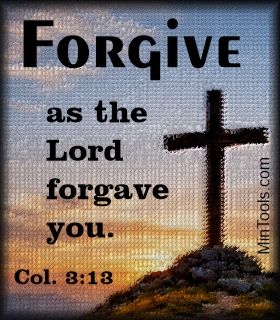
Forgive as the Lord forgave you, even parents who abusedScripture makes no exceptions on whom we are to forgive (Eph. 4:32; Col. 3:13). When we don’t forgive, it not only keeps a wedge between us and the other person but also hinders fellowship with the Lord (Matt. 6:12-15). Maybe your parent doesn’t deserve your forgiveness. Neither do any of us merit God’s forgiveness yet He went so far as to send Jesus to die for us so we could be forgiven. For the sake of the Lord and your relationship with Him, as well as your own inner healing, ask God to help you let go of your anger, bitterness, and resentment and forgive as He has forgiven you.

Share:

Students Evaluating Their Teachers

Share:

We want effective Sunday Schools, small groups, and other Bible learning opportunities. The overall structure of each of these programs matters but if the Bible teachers within these settings don’t teach well, it can diminish the effectiveness of the program itself. Who might best let us know how well teachers are doing than those who sit under their ministry — the students or small group members.

A Word About Evaluating Your Church’s Sunday School Teachers or Other Bible Teachers

Evaluation is an important responsibility of a Sunday School superintendent, Christian Education director, or ministry leader responsible for small groups or other kinds of Bible studies.  When doing evaluations, we need the right motivation but also a constructive process. If sharing results with teachers, we need to prepare them for both positive and negative criticism. We don’t want them getting defensive or so discouraged that they want to quit. — Help them understand that evaluation is a beneficial tool.

Having students evaluate the teachers is one way of doing it. Self-assessment can also be good. And, observation of teachers by leadership can be helpful as well. A combination of all three would be ideal, using a similar set of questions with each and then comparing all results. That way if any of the results are skewed, a look from the three perspectives could help bring a more realistic picture.

Format for Student Evaluation of Their Bible Teachers

Word the exact questions used in keeping with the age of the students … children, youth, or adults. The questions you use should also reflect what you want to measure.

Students Evaluating Bible TeachersYou might want to use a scale for them to respond with rather than a simple yes/no format of questions to potentially get a more accurate representation of how the teacher is doing. Or you might ask them to give examples. You want to avoid students being able to simply check off responses without truly thinking it through or being able to back it up so the evaluation doesn’t become a personality check but rather is a true assessment of the teaching.

Evaluative Questions to Ask Students about Their Bible Teachers

You might ask:

  • Does the teacher seem to be prepared?
  • Does the teacher seem to have a good understanding of the lesson?
  • Does the teacher communicate in ways you can understand (i.e., vocabulary, concepts, etc.)?
  • Does the teacher encourage participation?
  • Does the teacher use enough variety and creative methodology?
  • Does the teacher use enough visuals in lessons?
  • Does the teacher use class time wisely?
  • Does the teacher seem to answer questions honestly and respectfully?
  • Does the teacher explain instructions well?
  • Does the teacher clearly explain expectations?
  • Does the teacher seem attentive to students’ needs?

To take it to a deeper level, you can also ask questions along these lines:

  • How has the teacher contributed to your spiritual growth?
  • What do you see as the teacher’s greatest strength? … greatest weakness?
  • What frustrates you the most about the Sunday School class? … What do you like the most?

Please note: You are permitted to copy and use these questions to measure the effectiveness of your Sunday School or other Bible teaching ministry. If using all or most of the questions verbatim, you should make attribution to the source simply by a footnote such as: “Provided by Ministry Tools Resource Center – https://MinTools.com”

Check out the TrainBibleTeachers.com site for help training teachers where needed.

Share:

Spiritual Gifting of Deacons & Deaconesses

Share:
Deacons & Deaconesses Spiritual Gifting
(Click to enlarge in Pinterest & repin.)

We don’t find specific spiritual gifting listed in the qualifications given in 1 Timothy 3:8-13 nor in other verses pertaining to deacons. Given that the responsibility of deacons seems to be that of tending to the practical needs in the church, hence freeing up the elders to preach the Word and tend to the spiritual matters or shepherding in the Body, we can surmise what gifts would help them accomplish this service-oriented ministry.

The Spiritual Gifts Deacons and Deaconesses Do Not Need To Accomplish Their Responsibilities

The Bible seems to make a distinction between the responsibilities of deacons and elders.

1) Scripture uses distinct Greek words.  “Presbuteros” (elders) signifies those who exercise oversight while “diakonos” (deacons) suggests those who serve.

2) The qualifications listed in 1 Timothy 3 show elders needing to be “able to teach” (1 Tim. 3:2) but we do not find that qualification listed for deacons.

3) In Acts 6 the ministry of serving (diakoneo) the widows was delegated to others so the shepherds of the church did not have “to neglect the ministry of the word of God in order to wait on tables.” Those chosen for this servant-oriented task accomplished the type of ministry for which deacons seem to responsible, implying that they are not responsible for preaching or teaching the Word.

Consequently, deacons and deaconesses would not need the spiritual gifts of teaching or prophecy to effectively accomplish their responsibilities. This doesn’t mean that they can’t have these gifts but simply that they would not be required.

The Primary Spiritual Gifts That Fit the Ministry of Deacons and Deaconesses

The Spiritual Gift of Helps

One of the objectives of deacons and deaconesses seems to be that of freeing up elders for preaching and shepherding by doing any variety of practical tasks so the elders do not have to do it all and thus be distracted from their primary responsibilities. Someone with the spiritual gift of helps fits such a supportive role.

The Spiritual Gift of Service

The Greek word for deacon is “diakonos” and the word used for the gift of service is “diakonia”, a form of the same word. Consequently, it seems quite appropriate that a deacon might have the spiritual gift of service to fulfill his/her responsibilities. Someone with the gift of service tends to identify the tasks that need to be done, whatever they might be, and use available resources to get the job done.

The Spiritual Gift of Mercy

Though not called deacons in Acts 6, they chose these men to serve (diakoneo) widows. Very likely many of the needs deacons might encounter would be of a benevolent nature. Someone with the spiritual gift of mercy exercises the kind of compassion people in these kinds of situations use to meet practical needs.

Other Spiritual Gifts That Could Help Accomplish the Ministry of Deacons and Deaconesses

The Spiritual Gift of Administration

So many needs exist in the church that it takes organization and planning to effectively accomplish it all. Someone with the spiritual gift of administration could therefore serve well as the one who coordinates these efforts and matches up the right people to meet the needs.

The Spiritual Gift of Hospitality

The needs deacons serve can range from benevolence, finances, facilities, and many other logistics within the church. Still, other needs could relate to visitors or newcomers to the church who need to not only be ushered to their seats but also feel welcomed in a special way. A deacon with the spiritual gift of hospitality could extend that relational warmth while meeting their practical need of knowing where to go and what to do.

Quite possibly, a deacon could have one or a combination of the above spiritual gifts. The specific gift(s) the deacon has help determine the kinds of needs on which that person most frequently focuses his/her time and energy. Ideally a deacon board will include a good balance of the gifts needed to effectively accomplish this ministry.

Share:

Responsibility of Deacons & Deaconesses

Share:

What the Bible Teaches About Deacons & Deaconesses

Deacons and Deaconesses Responsibilities in Church
(Click to enlarge in Pinterest & repin.)

We know that Scripture usually mentions them with church leadership. For example, 1 Timothy 3:1-7 gives qualifications of overseers and then beginning in verse 8 we read, “In the same way, deacons are to be …” In addressing the Philippians church, the Apostle Paul wrote, “To all God’s holy people in Christ Jesus at Philippi, together with the overseers and deacons” (Phil. 1:1).

We’re also told to hold them to a high standard. See 1 Timothy 3:8-13 for a list of qualifications.

And, we must choose them wisely. You are not to take an “anyone will do” attitude in selecting deacons. 1 Timothy 3:10 clearly states, “They must first be tested; and then if there is nothing against them, let them serve as deacons.”

Also, we know that both men and women appear to have served in this capacity in the early church – so there were deacons and deaconesses. Phoebe serves as an example of a deaconess (Rom. 16:1).

What the Bible Does Not Specifically Say About Deacons

We do not find much teaching in the Bible about what a deacon does. The primary passage pertaining to deacons, 1 Timothy 3:8-13, deals with the character and life of someone who qualifies to be a deacon or deaconess. Their duties are not provided in this passage or other verses. We can, however, look at the original Greek word for help. “Diakonos” is probably from the verb “dioko” which, according to Vine’s Dictionary, means “to hasten after, pursue” primarily denoting a servant or an attendant who waits on others. Accordingly, a deacon would then be someone who cares for the needs of others.

Some use Acts 6 as an example of the work of deacons. Note, however, that this passages doesn’t actually call the seven men chosen for this responsibility deacons. Yet, we do find the verb form of diakonos in verse two which says, “It would not be right for us to neglect the ministry of the word of God in order to wait on (diakoneo) tables.” The early church leaders, the Twelve Apostles, could not do everything. When complaints surfaced that the “widows were being overlooked in the daily distribution of food” they knew something had to be done. They said, “choose seven men from among you who are known to be full of the Spirit and wisdom. We will turn this responsibility over to them” (v. 3).

Though not officially called deacons, they certainly seem to fit that role:

1) Their responsibility was to care for the needs of others … specifically here, widows.
2) Those chosen for this task had to meet certain qualifications … known to be full of the Spirit and wisdom.
3) They fulfilled ministry that freed up the leaders to do what they should be doing … the ministry of the Word of God.

Caring for the widows would be just one example of how deacons might tend to the practical needs in the church, hence freeing up the elders to preach the Word and shepherd the Body. Undoubtedly there would be many other practical needs for them to meet besides benevolence.

And, the Bible does not tell us what spiritual gifts a deacon or deaconess should have to fulfill their responsibility. In light of what we have concluded about their responsibility, we can surmise which gifts would be good for them to have. That, however, is a topic for the next post.

Share:

Christian Education: Building Programs or People?

Share:
Church Christian Education Ministry
Click to enlarge image in Pinterest & repin.

A previous post emphasized that Christian Education is an ongoing process. We never arrive at a built product. Rather, we are in a constant state of building. But, what are we building … programs or people? As was also communicated in the previous post, God’s objective is for believers to grow and keep growing to become more and more Christ-like. Will your programs and facilities help people grow? Prayerfully they will be used by God but we must keep perspective.

Programs are tools to build up people, not the means of growth.

Building up people begins with the cross and requires that we keep taking people back to the cross … not that they attend our programs.

When thinking about how God wants us to grow, we must take a look at 2 Peter 1:3-9. Verse five points to being intentional in the growth process — “make every effort to add to …” but notice where it begins: “to add to your faith.” We begin our journey as believers accepting God’s salvation “by grace through faith” (Eph. 2:8) because of the cross and add to that faith “goodness; and to goodness, knowledge; and to knowledge, self-control; and to self-control, perseverance; and to perseverance, godliness; and to godliness, mutual affection; and to mutual affection, love” (2 Pet. 1:5-7).

But, it doesn’t end there if we are going to be effective and productive in our knowledge of our Lord Jesus, we must “possess these qualities in increasing measure” (2 Pet. 1:8). The only way we are going to keep increasing is to keep throwing ourselves at the foot of the cross, the basis for His continued working in our lives — “But whoever does not have them is nearsighted and blind, forgetting that they have been cleansed from their past sins” (2 Pet. 1:9).

Building up people requires helping them get to know the God of the Bible … not merely gain Bible knowledge through your classes and programs.

Are you praying similarly for the people in your church as the Apostle Paul did for the Colossian church?

For this reason, since the day we heard about you, we have not stopped praying for you. We continually ask God to fill you with the knowledge of his will through all the wisdom and understanding that the Spirit gives, so that you may live a life worthy of the Lord and please him in every way: bearing fruit in every good work, growing in the knowledge of God, being strengthened with all power according to his glorious might so that … (Col. 1:9-11)

Notice how the objective wasn’t merely that they were filled with the knowledge of God’s will. Paul prayed that the people would also see the implications and application of that truth to their lives and live accordingly. To what end? — That they bore fruit but also that they grew in the knowledge of God … not merely knowing about Him, but truly knowing Him.

Though programs may be helpful tools, they aren’t the source of growth.

How important it is for us to notice in the context of the above referenced passages pertaining to believers growing, that we find the source of such growth.

2 Pet. 1:3 – His divine power has given us everything we need for a godly life through our knowledge of him who called us by his own glory and goodness.

Col. 1:11 – growing in the knowledge of God, being strengthened with all power according to his glorious might so that …

God will undoubtedly use our programs and facilities in the growth process as we build them according to His specifications, but we cannot give ourselves or our efforts the credit. Our programs are merely tools to plant and water the seed. “… neither the one who plants nor the one who waters is anything, but only God, who makes things grow” (1 Cor. 3:7).

If we view programs as an end in themselves, there will likely come a time when they are no longer useful to building up people. We will undoubtedly get to the point where Christian Education is about maintaining and perpetuating programs when God’s objective is that people “grow in the grace and knowledge of our Lord and Savior Jesus Christ” to which we can add, ” To him be glory both now and forever! Amen.” (2 Pet. 3:18)

Next step? – Validate the existence of the various programs you have developed.
For help: Questions to ask

Share:

Christian Education: Building or Built?

Share:

Are you satisfied with your Christian education ministry?

You could potentially get to the point where you’re happy with the facilities.

When I was a Director of Christian Education, my pastor gave me a privilege few ministry leaders get. He encouraged me to evaluate the facilities and make changes. We broke down walls to make some rooms bigger. We divided a larger room into an area for sleeping babies and active babies with the top portion of the wall a big plexiglass window so workers could keep an eye on the sleeping ones. We painted walls, put murals on some, made a couple doors so the top half could open by itself and others with windows, installed new carpet in a few rooms, put in child size toilets for the toddler room, etc. Was everything ideal? No, but I was very happy with it because it certainly was better than what we started with and it was the best we could do with what we had to work with. It was re-built and had the potential of making a big difference in our Christian Education ministry.

You could potentially get to the point where you feel good about the programs you offer.

Along with a facilities makeover, I was also able to make changes to our programming. I turned the nursery and toddler programs from primarily about babysitting to actual teaching on their age level. I revamped the structure of classes. In coordination with the pastor, I even instituted a Sunday School ministry that focused on one theme taught to all ages and continued by the pastor in his sermon so people left with one big idea and had a platform for discussion as a family. I developed Sermon Grabbers for children who were old enough to stay in the worship service that were based on that day’s sermon and enabled kids to listen for key truths in the sermon and interact with the content on their level. Many other ideas were implemented that hadn’t been done prior. Was everything perfect? No, but there was a higher level of excellence and focus than previously. It was built in such a way that it had the potential of making a bigger difference.

Once built to satisfaction, is your the educational ministry of your church making a difference?

You might have heard the statement, “If you build it, they will come.” We built it and they did come. Attendance grew to higher numbers than previously. Was all that enough? No. Why? — Because while you can get your facilities and programs to a state in which you consider them “built” … at least for a time … it all needs to be making a difference in people’s lives.

What needs to be our primary objectives?

Church Christian Education Ministry
Click to enlarge image in Pinterest & repin.

People’s Continued Spiritual Growth

Unlike facilities and programming, people never arrive. Christian Education must be about constantly building into people’s lives no matter how spiritually mature they become. Consider the words of the Apostle Paul in Philippians 3:10-12 —

I want to know Christ — yes, to know the power of his resurrection and participation in his sufferings, becoming like him in his death, and so, somehow, attaining to the resurrection from the dead. Not that I have already obtained all this, or have already arrived at my goal, but I press on to take hold of that for which Christ Jesus took hold of me.

If your Christian Education ministry is about your facilities and programs, you could potentially get to the point where you feel like you have it built. If Christian Education ministry is about people, you will constantly be in the building process. From physical birth to physical death, from new birth in Christ to glory with Him, it’s about helping people at all ages and stages to “grow in the grace and knowledge of our Lord and Savior Jesus Christ” (2 Pet. 3:18).

In reality, because we keep building into people’s lives and they continue to grow, the dynamic changes and new needs arise, so we find that our facilities and programs must sometimes be adjusted even when we feel like they had already been built to our satisfaction. That’s what happens when Christian Education is about building people and not just programs.

Share: