Quick Solutions or Real Change to Settle Disagreements?

Share:

Anyone who has served on an elder board or ministry team knows that we don’t always agree with one another about the best course of action. Ideally all decisions would be born out of prayer, and we would all get on the same page. But, we’re humans who don’t always walk in the Spirit and who come together from a variety of backgrounds and personalities with preconceived ideas and ways of doing things. It only takes one person in a group to be out of sync to head disagreements down a destructive path. We may be tempted to apply a quick solution to shut down the disagreement rather than seek for real change.

The Objective Will Determine if We Seek Real Change or Apply a Quick Solution

If our objective is to please everyone, we’ll want to do whatever it takes to keep peace. It seems like a quick fix to compromise or cover over key issues. That’s what we tend to do if our goal is to keep people happy.

When our objective is to come out better on the other end, we seek to learn from each other. We look for unity out of diversity. We want peace that comes from the heart not that which is insincere or manipulative (Rom. 12:16-21; 14:17-19; Phil. 2:1-2).

Results of Our Approach to Settling Disagreements

Quick solutions to appease people end up putting their concerns above God’s. We’ll probably find ourselves compromising where we shouldn’t. The Apostle Paul concluded, “Am I now trying to win the approval of human beings, or of God? Or am I trying to please people? If I were still trying to please people, I would not be a servant of Christ.” (Gal. 1:10). Doing what it takes to arrive at the best solution is often set aside in order to keep people happy.

God's Solution to Settle Disagreements
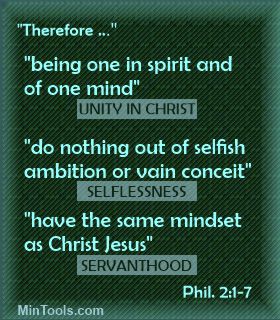
When we pursue real change, we help people learn what it means to seek the common good which might require setting aside personal preferences for what is best (Phil. 2:1-4). We plead with one another to be of “the same mind in the Lord” (Phil. 4:1-2). It’s about finding unity by getting on page with God, not by appeasing one another (Eph. 2:17-22). It’s about having “the same mindset as Christ Jesus” (Phil. 2:5). When that happens, God is glorified (Rom. 15:5-6).

More for Church Leaders: Conflict Management

Share:

Quick Solutions or Real Change in Staffing Issues?

Share:

Anyone responsible for overseeing staffing knows the struggles of recruiting enough people to fill all the needs. So, when we do get people to volunteer, we don’t want to lose them. And, we should do what we can to train, encourage, and support them in ways that let them know they’re valued and appreciated. But, what do we do if they aren’t a good fit? Or, what if they aren’t coming adequately prepared or have a negative attitude? We may be tempted to apply a quick solution rather than seek real change.

The Objective Will Determine if We Seek Real Change or Apply a Quick Solution

If our objective is solely filling ministry positions, then we won’t want to hurt the person’s feelings or upset them in any way. We don’t want them get frustrated and quit. We may cover for their inadequacies or make excuses for them so those affected don’t complain or at least cut them some slack. We may pull on more reliable people to fill in. These are quick solutions to try to keep everybody happy.

Solution to Staffing Issues is to Spur Them OnWhen our objective goes beyond the immediate situation to the long-range effect of people’s attitudes and behavior, we will be more concerned about helping the person serve in accordance with God’s heart and ways. We will then take steps to spur the person on to give of their best to the Lord in attitudes and actions (Heb. 10:24). This is about real change for God’s glory (Ps. 79:9).

The Results in How We Deal with Staffing Issues Reveal the Best Approach

Quick solutions fail to look at the big picture like how their actions or attitudes affect other people. It could possibly stir up negative feelings in others, dampening the morale of everyone and diminishing effective ministry.

Pursuing real change, however, challenges the person to look outside of themselves and brings them into accountability to the Lord, not us. Everyone benefits if the person changes from the inside out.

Need Help with Staffing? Check out the: Staffing Ministry Manual

Share:

Quick Solutions or Real Change?

Share:

In so many areas of church life it’s easy to simply apply a quick solution to, or cover over, a problem. Click on the link below for some practical examples like:

staff issues
disagreements
classroom discipline issues

For each of these situations we’ll consider the objective and results of applying a quick solution versus pursuing real change.

Quick Solutions versus Real Change

Quick solutions aim at outward conformity. We put a bandage on the issue, making it seem workable. That usually results in a temporary fix, with the real problem not getting solved. It often festers below the surface only to rise again, possibly in another, or worse, way than before. What starts small has the potential of growing into a major incidence when we apply quick fixes.

Real change, however, aims more for inward transformation that doesn’t always show outwardly right away but eventually does. It’s a slower process but usually produces results that tend to be genuine and enduring. What starts small generally stays small and often disappears.

Transformation Not Mere Outward Conformity
God sent Jesus so we could live in newness of life (2 Cor. 5:17; Eph. 4:20-24). His goal is inward transformation that begins with the renewal of our minds. When our hearts and minds are more like Him, the right conduct follows.

Why We Might Opt for Outward Conformity Though We Should Pursue Real Change

Real change takes time. That requires perseverance which may entail some sacrifice along the way. In a fast-paced world, we tend to want instant results. And, we often prefer the path of least resistance. We focus on the here and now rather than look at the big picture. In the end that usually leads to more stress and little that counts for eternity.

When, on the other hand, we follow Jesus’ example, and do what we must to promote real change, we find joy and purpose, knowing that what we’re doing counts for eternity. Any sacrifice, inconvenience, or discomfort will be worth it in the end.

Therefore, since we are surrounded by such a great cloud of witnesses, let us throw off everything that hinders and the sin that so easily entangles. And let us run with perseverance the race marked out for us, fixing our eyes on Jesus, the pioneer and perfecter of faith. For the joy set before him he endured the cross, scorning its shame, and sat down at the right hand of the throne of God. (Heb. 12:1-2)

Therefore, my dear brothers and sisters, stand firm. Let nothing move you. Always give yourselves fully to the work of the Lord, because you know that your labor in the Lord is not in vain. (1 Cor. 15:58)

Let us not become weary in doing good, for at the proper time we will reap a harvest if we do not give up. (Gal. 6:9)

Share:

Show People You Serve That You Truly Care

Share:

Show People We Serve that We Care Because without Love, Ministry is a Resounding Gong
Do people we serve know that we care? We’ll have the greatest impact in their lives when they experience our love and concern in ways that truly matter.

4 Ways to Show People You Serve That You Truly Care

We could make a long list of ways to show that we care. Here are four ways that we might not always think about as ways to show we care.

  1. Come alongside of people in ways that help them understand the reality of life in Christ. That means we “show” them by our own example (1 Cor. 11:1; Phil. 3:17; 2 Thess. 3:7) and not merely tell them. Read: The Gospel Touches Every Need of Our Heart

When people see that serving them isn’t just about accomplishing our agenda, but about them and their needs and who they are in Christ, then they’ll get the message we truly care.

  1. Use the Bible to connect people with a God whose love for them is so wide and long and high and deep (Eph. 3:18) that it’s difficult for our human minds to grasp. Since having a relationship with the Lord is the most important thing, then we must get beyond merely telling people what the Bible says.

When people see that we aren’t merely trying to indoctrinate them but really want what’s best for them, then they’ll get the message that we care.

  1. Take time to interact with people to make sure they truly understand. Ask questions, observe, and listen to what they’re saying. Don’t just assume they’re getting it.

When people see that we aren’t merely putting in our time but truly want them to learn and grow, then they’ll tend to believe we care.

  1. Invest time and attention into ministry efforts. Coming prepared will make it a better experience all around.

When people see that we aren’t simply doing enough to get by but are giving them our best, then they will sense that they are worth it to us, that we truly care.

Let’s take some time to reflect on the message our ministries send to people. Would we be able to say, “Because we loved you so much, we were delighted to share with you not only the gospel of God but our lives as well.” (1 Thess. 2:8)?

Share:

We Help Each Other Grow

Share:

God wants us to grow both as individual believers and as a Church. (If you haven’t already done so, read the series of posts beginning at: Spiritual Growth: Overview) While He uses a number of means, fellow believers have a big role in the growth process. God intends for us to help each other grow.

Our Role in Helping Each Other Grow

We Have a Part in Helping Each Other Grow
(Click image to enlarge in Pinterest & repin.)

We each have a part in one another’s growth.

From him the whole body, joined and held together by every supporting ligament, grows and builds itself up in love, as each part does its work. (Eph. 4:16)

Therefore encourage one another and build each other up . . . warn those who are idle, encourage the timid, help the weak, be patient with everyone. (1 Thess. 5:11-14)

We merely facilitate growth. God actually brings the growth.

… the Head, from whom the whole body, supported and held together by its ligaments and sinews, grows as God causes it to grow. (Col. 2:19)

I planted the seed, Apollos watered it, but God made it grow. So neither he who plants nor he who waters is anything, but only God, who makes things grow. (1 Cor. 3:6-7)

If we remember God’s strategic role in the process, we will be less likely to get proud or self-righteous when growth comes. We will be more prone to be like the Apostle Paul who said, “We ought always to thank God for you, brothers, and rightly so, because your faith is growing more and more, and the love every one of you has for each other is increasing.” Glory goes to God.

Reflect on What You’re Doing to Help Facilitate Other’s Spiritual Growth

Here are some questions to assist your reflection:

  • What is your part in helping others grow?
  • How faithful are you in doing your part?
  • How open are you to learning from others?
  • How quick are you to give God the credit when growth occurs?
Share:

In Some Cases Knowledge Really is Power

Share:

The phrase “knowledge is power” often really means that knowledge leads to power, but only if it’s used. So, in the worldly scheme of things, knowledge itself isn’t really power. There’s a very real sense in which knowledge isn’t power unless applied to life in the spiritual realm as well. Head knowledge alone won’t cause us to bear fruit. Notice the flow in Colossians 1:9-11 from knowledge to understanding to applying that knowledge to then bearing fruit and getting to know God even better. — “We continually ask God to fill you with the knowledge of his will through all the wisdom and understanding that the Spirit gives, so that you may live a life worthy of the Lord and please him in every way: bearing fruit in every good work, growing in the knowledge of God.”

Power Through Our Knowledge of Him
Yet, for us a believers, there is a very real sense in which knowledge “is” power as “His divine power has given us everything we need for a godly life through our knowledge of him who called us by his own glory and goodness” (2 Pet. 1:3).

How Knowledge is Power in the Spiritual Realm

We have power to live a godly life (2 Pet. 1:3), an empowered life that’s fruitful, one that makes an eternal difference (Jn. 15:1-5). To claim knowledge as power for us as believers depends on two factors:

1) It depends on how we define knowledge.

When 2 Peter 1:3 equates having divine power “through our knowledge of Him” it uses the Greek word epignosis which Vine’s Expository Dictionary defines as “full, or thorough knowledge, discernment, recognition”. It’s the kind of knowledge wherein we’re so intimately in tune with Him that we recognize His voice and actions above all others like sheep that know their shepherd’s voice and only follow him (Jn. 10:2-5). It’s the kind of knowledge that has firsthand experience with who God is so that like Job we say, “My ears had heard of you but now my eyes have seen you.” (Job 42:5) It’s the kind of knowledge that puts us in awe of God, what Scripture refers to as the fear of the Lord which “is a fountain of life, turning a person from the snares of death” (Prov. 14:27).

2) It depends on the subject of that knowledge.

2 Peter 1:3 goes on to say we have divine power “through our knowledge of him who called us by his own glory and goodness”. Such power is possible when we know the glorious King of kings and Lord of lords, the Great and Almighty God of whom there is none greater (Eph. 1:19). It’s about knowing the good and loving Savior who is full of mercy and grace, whose love is better than life itself (Ps. 63:3). It’s about knowing the reliable One who keeps His promises which are “very great and precious” (2 Pet. 1:4). His promises are great because of His glory and precious because of His goodness. This God must be the subject of knowledge, not a god of my own design. Otherwise we have an anemic god in whom there is little or no power.

The Results of Such Knowledge

Knowledge of this God, as described in Scripture, results in power that gives us “everything we need for a godly life” (2 Pet. 1:3). Here’s how it tends to go:

The more we get to know God for who He really is, the more we will revere and trust Him in all we do. “The fear of the Lord is the beginning of wisdom.” (Prov. 9:10)

As we trust this Almighty, Great, and Awesome God to work in and through us, we can’t help but get excited about Him. It’s what makes Romans 12:11 possible: “Never be lacking in zeal, but keep your spiritual fervor, serving the Lord.” This makes a big difference in ministry.

And, seeing His power at work in and through us, we won’t be able to help but worship and praise Him. He is the Great I Am, the One of whom there is none greater, worthy of our love and adoration. Worship truly focuses on Him.

Share: