Holiday Reminders Needed

Share:

Holiday Reminders Needed So We Don't Forget

Highlighting, underlining, to-do and to-buy lists, calendars, sticky notes, catch phrases, digital notifications, and so many more tools help us not forget what’s important to know or do. The same should also be true spiritually. God has taught us wonderful truths that provide answers, help, and hope in Him. Yet, without constant reminders, we’re bound to forget.

This can be especially so during busy seasons of life, like the holidays. We can get so caught up in what we must do during this time that we skip spending time alone with the Lord. We plan to resume after getting through the busy patch. We always need help remembering Him but we especially need holiday reminders about what’s most important.

Some Holiday Reminders for Christmas

We can get so consumed with buying and wrapping presents, going to parties, and decorating. When we do, we tend to forget what’s most important. Click on links below to help you reflect on what you need to remember.

(These posts form the basis for the Christmas Reminders Curriculum.)

Reminders for New Years

We can get so consumed with ringing in the new year that we forget the new life we have in Christ Jesus. Click on the links below to take time to remember the newness of life in Him. His mercies are “new every morning” (Lam. 3:21-22).

Reminders for Other Holidays

For Discipleship Guides, go to:

For articles, books, and resources about other holidays, go to:

What have you done, or what will you do, to remind yourself to keep focused on the Lord during the holidays? Will you turn to Him as the source of help and hope to remain steadfast in your walk with Him?

Share:

Getting Everyone on the Same Page in Ministry

Share:

In churches and ministries it’s important for leaders, teachers, and other workers to be on the same page in ministry in terms of basic doctrine but also the Church’s purpose, design, and mission. When they are not, confusion and conflict can easily creep in and sometimes even destroy the work.

Getting Everyone on the Same Page in Ministry in Regard to the Essentials

We must distinguish between essentials (i.e., basic doctrine, God’s purposes, design, and mission for the Church as found in the Word) and non-essentials (methods, forms, structures, means). Then we must determine which is causing the problem.

If a non-essential, perhaps we need to extend a little grace to one another. It may not be our preference or style, but it isn’t worth destroying the work of God for a non-essential (Rom. 14:12-20).

If we differ on something essential, then we have a problem that we must work through. Together we must bring the issue before God in prayer. We must learn what He says about it from His Word. Fighting for our own preferences or opinions, rather than seeking to align with God and His Word, inevitably will lead to greater conflict and consternation.

We need to lean on the Spirit for discernment (1 Cor. 2:9-16) so we see the real issue. If we don’t, we probably won’t work through our differences. Then we won’t understand why something that seems like a non-essential causes so much trouble.

Teachers have complained and quit over not having freedom to do their own thing when the real issue was not wanting to support the church’s doctrinal position or perhaps they weren’t clear on the purpose for which they were teaching.

Churches have split seemingly because of building issues or methodology when the real issue was philosophy of ministry based on differing views of the how the Church is to function.

In-fighting has ensued in board meetings over continuance or discontinuance of programs, allocation of funds, etc. when the real issue was that they didn’t have the same view of the church’s overall purpose and mission.

A Plan to Get People on God’s Page

If you’re a leader, work toward building a culture more concerned with doing ministry God’s way rather than having everybody do what’s right in their own eyes. Part of that will involve Bible teaching but also being an example of someone who continually seeks to align with the character and ways of God. Obviously that will require making sure you are on page with God’s overall purposes, design, and mission as found in His Word. And, it will undoubtedly require putting safeguards in place to keep yourself and the church or ministry on track.

When recruiting people for ministry, communicate this intent and train them on what it means to align with God’s purposes, design, and mission in their respective ministries. Here are some resources from Ministry Tools Resource Center that could give you a start in your training.

Getting Leaders on the Same Page with Steering the Church Leadership Guides

The Steering the Church Leadership Guides can be used for you own personal alignment or with your leadership team to work through biblical teaching about God’s purposes, design, and mission for the Church. The objective is to use God as our point of reference, our north star, not merely what we think should be happening or what other churches might be doing.

Christian Education Leadership Training to Get Everyone on the Same PageThe Christian Education Leadership Team Training Session can help the Christian Education ministry of your church get on the same page in regard to its overall goal — that of seeing changed lives — and to understand what it will take to progressively move forward toward that goal. The session can be used with leadership who in turn can then train teachers in their sphere of influence using the Teaching for Changed Lives Workbook.

A one-time training event won’t be enough to build this kind of culture. Since we humans tend to be forgetful, we need continued reminders. And, we must keep open channels of communication with one another to prayerfully discuss issues in ways that keep bringing us back to God as the One with whom we must align.

Share:

In the Beginning GOD …

Share:

What a difference it makes in our view of life when we begin with a God who is great enough, in all aspects, to create the heavens and earth! Think about the kind of God it would take to do that. He would have to be very powerful, creative, purposeful, and very wise. It would take an eternal God who is not limited by time and matter (infinite) to see how it could all fit together. Certainly, the One who brought it all into existence would be supreme over all.
In the Beginning God

Biblical Claims About the God Who Created All Things in the Beginning

It only makes sense that we would need an all-powerful and all-wise God as the Creator. Here are some verses that support who this God is:

By the word of the LORD the heavens were made, their starry host by the breath of his mouth. (Ps. 33:6)

The heavens are yours, and yours also the earth; you founded the world and all that is in it. (Ps. 89:11)

Before the mountains were born or you brought forth the whole world, from everlasting to everlasting you are God. (Ps. 90:2)

In the beginning you laid the foundations of the earth, and the heavens are the work of your hands. (Ps. 102:25)

Do you not know? Have you not heard? The LORD is the everlasting God, the Creator of the ends of the earth. He will not grow tired or weary, and his understanding no one can fathom. (Isa. 40:28)

This is what the LORD says— your Redeemer, who formed you in the womb: I am the LORD, the Maker of all things, who stretches out the heavens, who spreads out the earth by myself, (Isa. 44:24)

It is I who made the earth and created mankind on it. My own hands stretched out the heavens; I marshaled their starry hosts. (Isa. 45:12)

For this is what the LORD says – he who created the heavens, he is God; he who fashioned and made the earth, he founded it; he did not create it to be empty, but formed it to be inhabited— he says: “I am the LORD, and there is no other. (Isa. 45:18)

My own hand laid the foundations of the earth, and my right hand spread out the heavens; when I summon them, they all stand up together. (Isa. 48:13)

But God made the earth by his power; he founded the world by his wisdom and stretched out the heavens by his understanding. (Jer. 10:12)

Ah, Sovereign LORD, you have made the heavens and the earth by your great power and outstretched arm. Nothing is too hard for you. (Jer. 32:17)

He made the earth by his power; he founded the world by his wisdom and stretched out the heavens by his understanding. (Jer. 51:15)

For since the creation of the world God’s invisible qualities – his eternal power and divine nature – have been clearly seen, being understood from what has been made, so that people are without excuse. (Rom. 1:20)

You are worthy, our Lord and God, to receive glory and honor and power, for you created all things, and by your will they were created and have their being. (Rev. 4:11)

Learn more about the kind of God it would take in the beginning in the Our Great God from A to Z Discipleship Tool Download. This resource provides five different alphabet renderings looking at God from different aspects of His being, such as who He is as our Creator God.

More About God: Theology Resources

Share:

Showing Thanks, Not Just Saying Thank You

Share:

Showing Thanks in All Circumstances
For us as believers, giving thanks isn’t limited to a special Thanksgiving holiday. We “rejoice always, pray continually, give thanks in all circumstances; for this is God’s will for you in Christ Jesus” (1 Thess. 5:16-18). And, it also isn’t limited to simply saying thank you but also showing thanks. We “offer to God a sacrifice of praise — the fruit of lips that openly profess his name” AND we “do not forget to do good and to share with others, for with such sacrifices God is pleased” (Heb. 13:15-16).

Showing Thanks Reveals What’s Truly in Our Hearts

How easily we can casually say “thank you” and not really mean it. We might “enter His gates with thanksgiving” (Ps. 100:4-5) but then live the rest of the week griping and complaining about all that’s wrong with our lives.

Verbal expressions of gratitude and praise to God for what He has done for us are important but He is most pleased when we take it to the next step of showing our thanksgiving. When we live like grateful people, we tend to rise above the fray of life and think about others and their needs rather than focus on ourselves.

A Thanksgiving Prayer

A very important part of Hebrews 13:15-16 quoted above was not included. These verses begin, “Through Jesus, therefore, let us continually offer to God a sacrifice of praise …”. On our own we tend to be self-centered, but as recipients of His mercy and grace, we have motivation to look beyond ourselves.

This prayer by Samuel F. Pugh says it well:

O God, when I have food,
help me to remember the hungry;
When I have work,
help me to remember the jobless;
When I have a home,
help me to remember those who have no home at all;
When I am without pain,
help me to remember those who suffer,
And remembering,
help me to destroy my complacency;
bestir my compassion,
and be concerned enough to help;
By word and deed,
those who cry out for what we take for granted.
Amen.”

Let’s ask God to help us get beyond simply saying thanks to showing thanks. Reflect on living a life of thanksgiving with the disciple guide in the Holiday Reflections resource. This discipleship too includes guides for 14 different holidays.

Share:

What Are You Thankful For?

Share:

On the Thanksgiving holiday, we express gratitude. So, what are you thankful for? — A Home? Job? Family? Friends?

This thanksgiving, be mindful of the fact that not everybody has a place to call their own. Not everybody has a reliable source of income. Some have lost people they love. And, having a home, job, family and friends now, doesn’t mean you will tomorrow. What will you be thankful for then?

What the Psalmist Was Thankful For

Be Thankful, Give ThanksRead through the psalms and you’ll soon notice how the psalmist’s thanksgiving went beyond material blessings. Notice in the following verses for how his praise, or thanksgiving, was wrapped up in the person of God — who He is and what He has done.

We praise you, God, we praise you, for your Name is near; people tell of your wonderful deeds. (Ps. 75:1)

It is good to praise the LORD and make music to your name, O Most High … For you make me glad by your deeds, LORD; I sing for joy at what your hands have done. (Ps. 92:1-4)

Rejoice in the LORD, you who are righteous, and praise his holy name. (Ps. 97:12)

Give thanks to the LORD, for he is good; his love endures forever. (Ps. 107:1)

Let them give thanks to the LORD for his unfailing love and his wonderful deeds for mankind … (Ps. 107:8)

At midnight I rise to give you thanks for your righteous laws. (Ps. 119:62)

A Thanksgiving Challenge

This Thanksgiving, and beyond the holiday, let’s keep our focus on our great God, on the fullness of who He is, rather than looking at what we do or don’t have. When our gratitude centers around Him, like the Apostle Paul, we’ll learn to be content “in any and every situation, whether well fed or hungry, whether living in plenty or in want” (Phil. 4:11-13).

Share:

First Steps to Change

Share:

Churches have had to implement change in many ways to stay effective, especially in recent years. How will we help people see where the church is going and their part in that process? Before trying to implement change, especially that which affects the church’s culture or DNA, we need to follow some important first steps to change.

Three Important First Steps to Change

If we’re going to effectively implement change, we can’t rush into it without doing these three steps:

  • Make Sure to Lay the Groundwork

To come onboard, people need to understand not just what changes must be made but why change is necessary. Simply telling them changes we’ve decided on will give them little incentive to do their part. When they are involved early on in the decision-making process, they’ll tend to have more of a sense of ownership of the changes needed and hence be more involved in getting there. We need to patiently lay some groundwork, asking ourselves questions like:

  • What do people need to understand in order to come onboard?
  • What means can we use to help them gain that understanding?
  • How can we consistently communicate that understanding?
  • Make Sure Leadership is Onboard

We will lay groundwork through teaching but that needs to be reinforced by the example of leadership. People must see a consistency between what we communicate formally and what they observe informally. Let’s first get leadership in the church on the same page and then move out to getting the rest of the Body onboard.

  • Make Sure to Get on Page with God

All of this needs to be enveloped in prayer. Undoubtedly heart change must happen, not just behavioral conformity. That requires divine power. If we fail to get beyond behavioral conformity, we probably won’t experience lasting change.

  • Pray in the planning stage.
  • Pray while laying the groundwork.
  • Pray in the implementation stage.
  • Pray when evaluating results.

First Things First Before Implementing Change

Too often we skip these first steps. Then we wonder why change is so difficult or why it doesn’t last or make a real difference. The third step listed above should actually be the first step in the process and infiltrate the other steps. — We need to be on page with God.

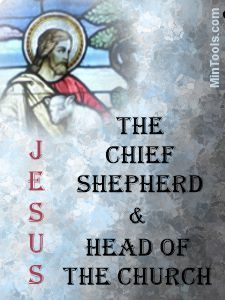
First Steps to Change Include Following the Chief Shepherd, Head of the CHurchChanges we make in the church must be more than the idea of an individual leader or leadership team. Jesus is the Chief Shepherd (1 Pet. 5:4) so we follow Him. We, as the entire Body of Christ, need to be following the direction of the Head of the Church.

And God placed all things under his feet and appointed him to be head over everything for the church, which is his body, the fullness of him who fills everything in every way. (Eph. 1:22-23)

… Christ is the head of the church, his body, of which he is the Savior. (Eph. 5:23)

And he is the head of the body, the church; he is the beginning and the firstborn from among the dead, so that in everything he might have the supremacy. (Col. 1:18)

So, first things first. Get on page with God, make sure leadership is onboard, and be sure to lay the groundwork with the rest of the Body. Then it will be time to start implementing change.

Also Check Out: Church Leaders & Change Management

Share: