Studying the Character of God Helps Us in Ministry

Share:

Studying the Character of God Our Mighty Fortress

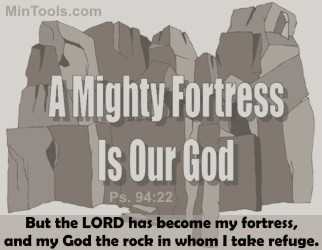
The Ministry Worker’s Devotional: A Mighty Fortress Is Our God likens the individual attributes of God to rocks upon which we can stand. Put all those rocks together and we have a mighty fortress in our God! With all we have coming against us in ministry, it only makes sense, then, that we study the character of God.

How Studying the Character of God Benefits Us in Ministry

Knowing God in the fullness of who He is, His character and ways, leads to a healthy, reverential fear of God that will provide you with the following:

A base from which to make wise decisions. There is so much to do and so little time to do it in. What should be priority? From all the good choices, which is best?

“The fear of the Lord is the beginning of wisdom.” (See Ps. 111:10; Prov. 1:7; 9:10; 15:33)

A standard to keep you on course. In ministry it is so easy to hop on the bandwagon of current ministry trends or fads. The broad way is not always the right way for you (Matt. 7:13-14; Prov. 14:12).

To the one who fears the Lord, “He will instruct him in the way chosen for him.” (See Ps. 25:12; 33:8-11)

A compass for morality. Just because you are in Christian ministry doesn’t mean you will avoid temptations. The lure to follow the ways of the world is great. The pull of the flesh can be strong. The tendencies to boast won’t let go.

“Through the fear of the Lord a man avoids evil.” (See Prov. 8:13-14; 16:6; 23:17)

A means to a life worth living. Sometimes ministry brings little earthly reward or applause. When you fear the Lord, you can rise above and find meaning, contentment, and satisfaction nonetheless.

“The fear of the Lord is a fountain of life.” (See Prov. 10:27; 14:27; 19:23; 22:4)

A bolster to confident living. Security breeds confidence. If you rest in the power and protection of the Lord, you can firmly stand and move out with competence knowing He will be there for you. He is your sufficiency.

“He who fears the Lord has a secure fortress.” (See Prov. 14:26)

A source of comfort and hope in times of trouble. Things don’t always go as planned. Sometimes you will make mistakes. Sometimes you will meet with opposition. You have an enemy who wants to thwart God’s plan in your life and ministry. But, “if God is for us, who can be against us?” (Rom. 8:31)

“The eyes of the Lord are on those who fear him, … to deliver them …” (See Ps. 22:23-24; 33:18-22; 34:7)

A path to intimacy with God. Do you want to know God’s ways? Do you want to know His will? Get to know His heart. Learn about His character. Get to know who He is.

“The Lord confides in those who fear him.” (See Ps. 25:14)

Check out the Ministry Workers Devotional for how specific character traits of God relate to serving.

Get a broader view of the character of God in the Our Great God from A to Z Discipleship Tool Download. You’ll find an alphabetical listing of His attributes as well as another list that describes the kind of God it would take to create the heavens and earth. In addition, this resource looks at our Triune God with how God the Father, God the Son, and God the Holy Spirit works on our behalf with an alphabetical listing for each member of the Godhead.

Share:

Wait for the Lord

Share:

Wait for the Lord

Whether it’s a new year or any other event in our lives, we would do well to learn from the Israelites who “did not wait for His plan to unfold” (Ps. 106:13). Though God extended His kindness toward the Israelites in Egypt, they still rebelled. “Yet he saved them for his name’s sake, to make his mighty power known.” (Ps. 106:8) He rescued them from their adversary by parting the sea. “Then they believed his promises and sang his praise.” (Ps. 106:12)

You would think such a miraculous delivery would seal their trust in God’s intent to do good for them and His ability to bring it about. “But they soon forgot what he had done and did not wait for his plan to unfold.” (Ps. 106:13) They repeatedly put God to the test. Read the remainder of Psalm 106 to see how that led to much needless trouble.

Why We Don’t Wait for the Lord

Who likes the wilderness experience? Who doesn’t want the good without experiencing pain or hardship? Yet, like the Israelites of old, God sometimes takes us on an indirect route to get to His place of blessing. If, like the Israelites, we focus on our circumstances rather than on our God, we too will experience needless trouble along the way.

Psalm 106:13 cues us in on why they didn’t wait on the Lord — “they soon forgot what he had done …” As a result, their impatience with the process led them to take matters into their own hands and to turn to sources other than God for help and hope.

Why We Should Wait for the Lord

The Israelites had every reason to wait for the Lord. He had already proven Himself faithful. He had already demonstrated His power. God already had shown Himself greater than their circumstances.

For us today, let’s think about what God has already done for us in sending Jesus.

But God demonstrates his own love for us in this: While we were still sinners, Christ died for us. Since we have now been justified by his blood, how much more shall we be saved from God’s wrath through him! For if, while we were God’s enemies, we were reconciled to him through the death of his Son, how much more, having been reconciled, shall we be saved through his life! (Rom. 5:8-10)

God has already demonstrated how much He loves us. God has already proven His desire and ability to do for us what we cannot do for ourselves. Certainly we should believe “that he who began a good work in you will carry it on to completion until the day of Christ Jesus” (Phil. 1:6). The more we understand the character of our faithful, powerful, and loving God, the more we will realize that we have every reason to “wait for His plan to unfold” in our lives.

Share:

God MUST BE All-Knowing

Share:

If God is the One of whom there is none greater, then He must be all-knowing (omniscient), meaning that He has complete, knowledge that is beyond measure (Ps. 147:4-5). If anyone knows something He does not know, then His knowledge is not perfect.

An All-Knowing God Knows the Big Picture

All-Knowing God - Omniscient
(Click to enlarge image in Pinterest & repin.)

An omniscient God knows what has happened, what will happen, and what is happening now. He knows the beginning and the end, hence the big picture. To be God, He must know how all the pieces fit together. Otherwise, He is just one of the many pieces — a part of, not above and beyond. Consequently He would not have sovereign rights.

Implication: Line up with God and His purposes who is able to claim, “I am God, and there is no other; I am God, and there is none like me. I make known the end from the beginning, from ancient times, what is still to come. I say, ‘My purpose will stand, and I will do all that I please …'” (Isa. 46:9-10). Sometimes we act like we expect God to line up with our purposes, what we think is best, what we think should happen. But, we don’t know the beginning from the end. Let’s not lean on our own understanding (Prov. 3:5-6) when we have an all-knowing God.

An Omniscient God Knows What Will Happen Before It Occurs

Knowing the future is part of what sets the God of the Bible apart from other gods (Isa. 41:22-24; 44:6-8). Anyone can learn from history. To know what will happen, with total accuracy, before it occurs, can only be attributed to the true God. — “I am the LORD; that is my name! I will not yield my glory to another or my praise to idols. See, the former things have taken place, and new things I declare; before they spring into being I announce them to you.” (Isa. 42:8-9)

Implication: While there are a lot of things we don’t understand about the foreknowledge of God, one thing we can be sure of is that it enables Him to work all things out for the good (Rom. 8:28-32; Jer. 29:11). This is a God we can trust to be for us now and through all eternity.

A God Who Knows All is Self-Sufficient

Someone who knows all there is to know doesn’t need counsel or instruction (Isa. 40:14). Romans 11:34 describes God as the One with such a reservoir of wisdom and knowledge that no one comes close to being His equal. Consequently, He is sufficient unto Himself, a prerequisite for being God. His ways and thoughts are so much higher than ours (Isa. 55:9) that there isn’t anything we could tell Him that would improve His plans.

Implication: We can gain perspective in the realization that God doesn’t need our help in determining the right course of action. Who are we to tell Him what He should or shouldn’t do? Think about Job’s questions about the justice of his suffering. God responded by contrasting His power and knowledge with limited human knowledge (Job 38-41). To all of this, Job could only confess, “Surely I spoke of things I did not understand, things too wonderful for me to know” (Job. 42:1-3).

To Be All-Knowing God Must Know Even the Secrets of the Heart

God not only knows our observable behavior but also what is invisible, deep within that no one else can see or fully understand. He knows what we will say even before we open our mouths (1 Chron. 28:9; Ps. 139:4; Matt. 6:8). Though we may fool others, He knows our guilt and innocence, whether we have a faithful or idolatrous heart (Ps. 44:21; 69:5; 1 Jn. 3:19-20).

Implication: Since there is no place we can hide from God and nothing we can hide from Him (Ps. 139:1-12), why not work in cooperation with God rather than fight against Him (Ps. 139:23)? — Nothing in all creation is hidden from God’s sight. Everything is uncovered and laid bare before the eyes of him to whom we must give account. (Heb. 4:13)

God’s omniscience is just one attribute. For an alphabetical listing of His attributes, check out the Our Great God from A to Z Discipleship Tool Download.

Share:

God MUST BE Eternal

Share:
God is Eternal
(Click to enlarge image in Pinterest & repin.)

To call someone God implies not just greatness, but being the One of whom there is none greater. The God of the Bible said, “Before me no god was formed, nor will there be one after me. I, even I, am the LORD, and apart from me there is no savior.” (Isa. 43:10-11) — How can He make that claim? Because He is eternal.

God MUST BE eternal to be God

If a great being came into existence at some point in time, what we have is “a” god, not the God. That god would be locked into time. If he came into being, what’s to say he won’t cease to exist. A God who is without beginning or end is the One of whom there is none greater.

LORD, are you not from everlasting? My God, my Holy One, you will never die. … (Hab. 1:12)

Scripture opens with “In the beginning God …”, assuming God already existed before time began. He always was and always will be. That explains how God could call Himself “I AM” (Ex. 3:14).

Before the mountains were born or you brought forth the whole world, from everlasting to everlasting you are God. (Ps. 90:2)

Implications of having an Eternal God:

1) Only an Eternal God is able to offer eternal blessings. In Him we have eternal salvation and everlasting life (Matt. 25:46; Jn. 3:15-16; 5:24; 10:28). He also gives us joy and eternal pleasures (Ps. 16:11), eternal encouragement and good hope (2 Thess. 2:16), an eternal house in heaven (2 Cor. 5:1), and an eternal inheritance (Heb. 9:15). — This gives our life here on earth, no matter how difficult it might get, increased meaning and purpose.

Therefore we do not lose heart. Though outwardly we are wasting away, yet inwardly we are being renewed day by day. For our light and momentary troubles are achieving for us an eternal glory that far outweighs them all. So we fix our eyes not on what is seen, but on what is unseen, since what is seen is temporary, but what is unseen is eternal. (2 Cor. 4:16-18)

2) Likewise, only an Eternal God can follow through on eternal judgment (Matt. 25:46; 2 Thess. 1:9; Jude 1:6-7). — This should give us increased motivation to reach out to others with His message of salvation.

… punished with everlasting destruction and shut out from the presence of the Lord and from the glory of his might (2 Thess. 1:9)

3) What He speaks can stand true throughout all eternity (Gen. 9:16; 17:7, 13, 19; Ps. 119:89, 160; 145:13; Heb. 13:20). — This gives us reason to trust His Word, covenants, and promises, even if we don’t see its fulfillment in our earthly lifetime.

Your word, LORD, is eternal; it stands firm in the heavens. (Ps. 119:89)

All your words are true; all your righteous laws are eternal. (Ps. 119:160)

4) To be God He would also have to remain true to Himself, to who He is, throughout all eternity. — This means we can count on His unfailing love (Ps. 103:17; Jer. 31:3), kindness (Isa. 54:8; Jer. 31:3), righteousness (Ps. 103:17; 119:142), power (Rom. 1:20), etc. Hence, we have an eternal Rock to stand upon (Is. 26:4) who is always out for the welfare of His people and an eternal King (Jer. 10:10) capable of ruling justly.

The eternal God is your refuge, and underneath are the everlasting arms. (Deut. 33:27)

5) To Him belongs eternal praise (Ps. 106:48; 111:10; Neh. 9:5). He existed before us and all of creation, making Him the One of whom there is none greater. — This means no one else is more worthy of our worship. He deserves our all.

Now to the King eternal, immortal, invisible, the only God, be honor and glory for ever and ever. Amen. (1 Tim 1:17)

The eternality of God is just one of His many attributes. Get alphabetical listings of His attributes in the Our Great God from A to Z Discipleship Tool Download.

Share:

Theology?

Share:

Theology may sound like a scary word to some who think it’s reserved for people in Bible college or seminary. However, it is quite simply a study of God.

theology:

“theos” (theo-) = God
“logos” (-ology) = word

Theology, then, would be words about God, or a study of God. Where do we find words about God? — in His Word, the Bible. Hence, we can learn about God simply by opening the Bible and determining what it tells us about God. We don’t have to go to college or seminary for a basic understanding but rather read and study the Bible.

Questions to Help Your Understanding of Theology

When reading a Scripture passage, ask yourself these questions:

  1. What do these Bible verses teach me about the character of God?
  2. What names are used for God in this passage and what might that tell me about God?
  3. What did God do in these Bible stories, or what does the passage promise He will do, so I can learn more about His ways?

But, let’s not stop at merely knowing about God. Also ask these questions:

  1. How does this understanding about God make me feel?
  2. How should I respond to this kind of God?

See! You don’t have to be a scholar. You don’t have to be ordained or a church leader to be a theologian. You merely have to ask some questions about the words you are reading in the Bible that help you learn about God and His ways. Sure, you may not be a professional without the formal training but you still can get to know God.

For help learning about God: Theology Resources

Share:

Responding to God as Our Father

Share:
God as Our Father
(Click to enlarge in Pinterest & repin.)


God, as our Everlasting Father (Isa. 9:6), will always work for the good of His children.

You’ll find a full listing of how God goes from A to Z for us as our Father in the Our Great God from A to Z Discipleship Tool Download.

How can we not respond to our Everlasting Father?

Let’s honor Him and bring glory to Him in all we do.

let your light shine before others, that they may see your good deeds and glorify your Father in heaven. (Matt. 5:16)

Let’s subject ourselves to Him more than we would to any other person.

Moreover, we have all had human fathers who disciplined us and we respected them for it. How much more should we submit to the Father of spirits and live! (Heb. 12:9)

Let’s give Him thanks.

always giving thanks to God the Father for everything (Eph. 5:20)

giving joyful thanks to the Father (Col. 1:12)

And whatever you do, whether in word or deed, do it all in the name of the Lord Jesus, giving thanks to God the Father through him. (Col. 3:17)

Share: