A Changing Church Still Maintains God’s Primary Purposes

Share:
Resources about God's Purposes
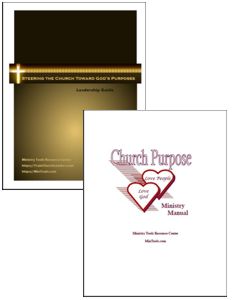
Click image for resources to learn more about God’s purposes to love.

While much will change in our churches, not everything must or should change. For example, God’s primary purposes for His people to love God with all of who we are and to love others (Matt. 22:37-40), remains the top priority.

Read: Have a Church Purpose Based on the Greatest Commandments to Love?

Any changes we make need to align with this primary purpose for without love, we’re just “a resounding gong or a clanging cymbal” (1 Cor. 13:1-3).

How Do We Maintain God’s Primary Purposes Despite the Need to Change the Way We “Do” Church?

While we might not be able to “do” church as usual, we can still be the Church by fulfilling God’s purposes to love.

We have many, many ways to express love to God. It might look different, but as His people, we still make it a priority to demonstrate our love to God.

The question isn’t “if” we worship but rather “how” we can do it in ways that are safe, considerate, and respectful for worship leaders as well as the Body.

The question isn’t “if” we help people learn about God but rather what the best platforms might be for doing that.

The question isn’t “if” we pray together as a church but rather when and where.

And, we still have many ways to show God’s love to one another. It might require more planning and creativity but loving one another as He loves remains a priority.

The question isn’t “if” we can do outreach but rather what the most effective means of doing so might be.

The question isn’t “if” we fellowship with one another but rather the format ongoing interaction with each other might have to take.

The question isn’t “if” we help one another in practical ways (benevolence) but rather how to best utilize the resources we have in the context in which we live.

We’ve grown accustom to worshiping, Bible learning, praying, outreach, fellowship, and benevolence happening in certain ways. Perhaps it’s time to remember “why” we do these things — to show love to God and people. Like the Church of Ephesus, in Revelation 2, we can be “doing” all the right things, even endure hardship, yet miss the mark if our love has grown cold.

As we navigate changes ahead, let’s view them as opportunities to re-examine our motivations and priorities. If we’re having a difficult time letting go of old strategies and programs, let’s ask why.

Resources to Help Maintain God’s Purposes to Love:

Share:

The Church and Change

Share:

Traditionally the Church has been slow to change, even resistant to change. Yet, we’re living in a day when change is not only inevitable but necessary. The question isn’t “if” we change but “how” we change.

In a book first copyrighted back in 1998, Howard G. Hendricks wisely wrote something even more relevant for today:

Has your church outlived its usefulness? Will it still have something to contribute even five years from now? Only if it embraces change. For change is the ocean in which our society swims. As Charles Handy of London School of Economics has put it, we inhabit an age of discontinuity, a chaotic time in which the rate of change itself is accelerating rapidly. Is it possible for your church to survive, let alone thrive, amid such chaos? Absolutely! But it will require more than “business as usual.” Above all, it will require creativity – the ability to envision and embrace a new future. (Color Outside the Lines: A Revolutionary Approach to Creative Leadership – link goes to one of our affiliate stores).

When talking about our need to be creative as a Church, we must understand that creativity doesn’t have to translate into a humanistic, worldly pursuit. The fluidity, adaptability, and responsiveness we need does not have to convert into compromise.

Basics to Remember about the Church and Change

Wisdom's Foundation Has ConsequencesIn God’s economy, the end does not justify the means. So, if we want to change in ways that glorify God and bring us out even better as a Church on the other side, then we need to follow these basics:

1) Distinguish between that which is negotiable and that which is non-negotiable.

While change may be necessary let’s remember that not everything changes. We still hold tight to our unchanging God and His absolute truth (Ps. 90:2; Isa. 40:8; Heb. 13:8; James 1:17).

2) Always turn to the Head of the Church (Eph. 1:22-23; 4:15-16; Col. 1:15-18) for wisdom and the steps to take.

The Church is still HIS Church so let’s keep praying about our situation and changes that need to be made. Now is not the time to be governed by circumstances, fears, the world, or even what other churches are doing. We can learn from others, but our Lord should always have the final word on what we do.

3) Don’t settle for becoming less of the Church than God intends for us to be.

Seek to make changes by His grace and power that maximize the potential for:

For more about change management in light of the basics of life in Christ, go to: TrainChurchLeaders Change Management Category

Share:

Worship a Priority?

Share:

Loving God Make Worship a Priority

How can we love God with all of who we are (Matt. 22:37) and not spend time telling Him what we think of Him, how much we adore Him? Making worship a priority seems to be the logical response.

9 Biblical Reasons to Make Worship a Priority

A walk through the Bible shows how much of a priority worship should be for God’s people.

  1. Refusal to worship caused Satan’s fall. (Isa. 14:12-14)
  1. Worship was central in the Old Testament law. (Ex. 20:1-7; 34:14)
  1. God gave Moses detailed plans for tabernacle worship. (Ex. 25-30)
  1. God gave David detailed plans for temple worship. (1 Chron. 22-26)
  1. Israel was judged because they did not worship God. (2 Chron. 7:21-22; 24:18; Jer. 16:10-11; 22:8-9)
  1. People have risked their lives rather than stop worshiping God. (Dan. 3:10-18, 28; 6:1-28)
  1. Jesus lived to glorify the Father. (Jn. 2:13-17; 8:29; 13:31-32; 17:1)
  1. Worship was an integral part of early church life. (Acts 2:42-47)
  1. Worship will continue into eternity. (Rev. 4:10-11; 7:11-12; 11:16-17; 19:4-8)

As we see throughout Scripture, we will put no other God before Him when we love Him with ALL of our affection, ALL of our very being — now and forevermore.

This content on worship, along with some other thoughts on worship, is included in the Church Purpose Manual, as one of the ways we fulfill our purpose to love God.

Some resources on worship:

Share:

Prayer a Priority?

Share:

Make Prayer a Priority
Communication tends to be a big part of any love relationship. How much more, then, we should make prayer a priority when we love the Lord.

4 Biblical Reasons to Make Prayer a Priority

In addition to prayer being a part of our love relationship with the Lord, we also find commands for praying to be an ongoing priority in our walk with God.

  1. We’re told to be faithful in prayer. (Rom. 12:12)
  1. We’re to devote ourselves to prayer (Col. 4:2) which we see demonstrated in the Early Church (Acts 2:42).
  1. We’re commanded to pray continually. (1 Thess. 5:17)
  1. We’re to pray in the Spirit on all occasions. (Eph. 6:18)

Certainly these commands about praying suggest we develop a lifestyle of prayer, regular and on-going communion with the Lord, which suggests the kind of priority praying should be for those who love God with all of their heart, soul, mind, and strength (Lk. 10:27).

The Church Purpose Manual looks at prayer as one of the ways we fulfill our purpose to love God.

Other resources on Prayer:

Share:

Outreach a Priority?

Share:

To love God is to want others to come into a love relationship with Him as well. Hence, outreach becomes a priority.

4 Biblical Reasons Outreach Should be a Priority

Outreach is a Priority Because Jesus Came to Seek and SaveOutreach is wrapped up in the heart and purposes of God.

  1. Outreach is important enough for Jesus’ last command on this earth to be that we go and make disciples of all nations. (Matt. 28:18-20)
  1. It’s part of God’s eternal purpose to send Jesus to seek and to save the lost. (Lk. 19:10)
  1. God patiently waits for more people to learn about Him as He doesn’t want anyone to perish. (2 Pet. 3:9)
  1. Jesus demonstrated God’s love and compassion toward the lost. (Matt. 9:36-38; 23:37)

If reaching out with His love is so important to God, shouldn’t it be for us as well?

The Church Purpose Manual looks at outreach as one of the ways we fulfill our purpose to love God and others.

More Resources:

Share:

Fellowship a Priority?

Share:

Fellowship a Priority


The Christian life isn’t meant to be lived alone but rather in fellowship with one another. The corporate, common sharing of life in Christ (koinonia), therefore needs to be a priority for His Church.

6 Biblical Reasons Fellowship Should be a Priority

God’s Word provides a number of reasons we should view fellowship with one another as important.

  1. God created people for human community. (Gen. 2:18)
  1. We find a corporate aspect of God’s people both in both Old Testament life and in the New Testament Church. (Gen. 12:2; Eph. 2:19-22)
  1. The Early Church devoted themselves to fellowship. (Acts 2:42)
  1. Jesus prayed for our oneness to be patterned after the fellowship enjoyed in the Trinity. (John 17:20-23)
  1. We’re commanded not to forsake relationship with one another which requires spending time with one another. (Heb. 10:25)
  1. Eternity with the Lord has a corporate dimension as well. (Rev. 21:2-22:5; Heb. 11:10, 13-14; 1 Thess. 4:16-18; Phil. 3:20)

If we can’t fellowship with one another, perhaps we need to ask if we’re in fellowship with God.

Whoever claims to love God yet hates a brother or sister is a liar. For whoever does not love their brother and sister, whom they have seen, cannot love God, whom they have not seen. And he has given us this command: Anyone who loves God must also love their brother and sister. (1 Jn. 4:20-21)

The Church Purpose Manual includes what you read in this post along with more about this priority as well as other ways we can live out our purpose to love God and people.

More: Resources on Fellowship

Share: