Biblical Ways to Fellowship with One Another

Share:

Biblical Ways to Fellowship with One Another
The Greek word used in the Bible for fellowship, koinonia, means the sharing of what we have in common (koinos). Our life in Jesus Christ brings us together as that which we share in common, superseding all of our differences. But how do we share, or participate, in that common life? There are at least four biblical ways to fellowship with one another.

Four Biblical Ways to Fellowship with One Another

If we look at Bible verses where koinonia appears, we find the process of fellowshipping with one another.

1) Celebrate together what Jesus has done for us through the Lord’s Supper, also known as Holy Communion.

Is not the cup of thanksgiving for which we give thanks a participation (koinonia) in the blood of Christ? And is not the bread that we break a participation (koinonia) in the body of Christ? (1 Cor. 10:16)

2) Contribute materially to the needs of one another.

For Macedonia and Achaia were pleased to make a contribution (koinonia) for the poor among the Lord’s people in Jerusalem. (Rom. 15:26)

For I testify that they gave as much as they were able, and even beyond their ability. Entirely on their own, they urgently pleaded with us for the privilege of sharing (koinonia) in this service to the Lord’s people. (2 Cor. 8:3-4)

3) Communicate about God’s work in each other’s lives.

that the sharing (koinonia) of your faith may become effective by the acknowledgment of every good thing which is in you in Christ Jesus. (Phil. 1:6)

4) Connect with one another in sharing the whole of our lives on a regular basis, engaging in true community.

They devoted themselves to the apostles’ teaching and to fellowship (koinonia), to the breaking of bread and to prayer. … All the believers were together and had everything in common (koinos). … (Acts 2:42-47)

All the believers were one in heart and mind. No one claimed that any of their possessions was their own, but they shared (koinos) everything they had. … (Acts 4:32-35)

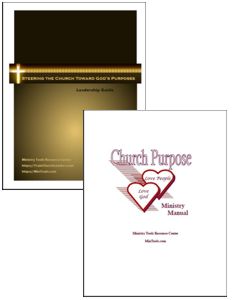
You’ll find these processes of fellowshipping listed in the Church Purpose Manual which looks at fellowship as one of the ways to fulfill our purpose to love people. It also considers other ways to live our our purpose to love God and people.

For More: Fellowship Resources
Share:

Keeping Issues from Blocking Church Growth & Health

Share:

We want to see our churches grow and become spiritually healthy. Yet, church leaders must deal with many issues that can prevent or stunt reaching those objectives. We can, and should, learn as much as we can about the obstacles but keeping issues from blocking church growth and health requires aligning with God’s overall purposes for the Church.

Objective to Grow & Become Spiritually Healthy

First spend some time reflecting on your desire for church growth and health. Ask God to help you understand your part in it and how to handle blockages to that growth. Here are some articles and books that can help you grasp a better understanding of this objective:

Issues That Might Be Blocking the Realization of These Objectives

Obstacles of both a physical and spiritual nature can sometimes block church growth and health. This post won’t provide solutions but rather point to other resources for you to read, reflect on, and pray about.

  1. Physical concerns like safety and legal issues can get in the way of spiritual growth and health if not dealt with effectively. They could become distractions and even cause people to become disillusioned with the church. Perhaps the following resources can help you with these kinds of issues:
  1. Sometimes people stray from God and His ways. Similar to the account of Achan in the Old Testament whose disobedience to God affected the whole camp (Josh. 7), so will sin left unchecked in the Church lessen its light and saltiness in the world (Matt. 5:13-16). If the people in the church act and react no better than everyone else, what’s the benefit of becoming part of it? Church leaders can find help thinking about their role in these situation in the following resources:
  1. When conflict festers in a church, it tends to derail real ministry and can even lead to division. Jesus clearly stated that a house “divided against itself will not stand” (Matt. 12:25). Leaders can become so consumed with putting out relational fires that they have little left to steer the church toward health and growth. If we can’t reconcile with one another and find ourselves wrapped up in political power plays, how are we any different than the world around us?

Keeping These Issues from Blocking Church Growth & Health Requires Aligning with God’s Purposes

We must always remember what Jesus identified as the Greatest Commandments — to love Him with all of who we are which spills over into loving others (Matt. 22:37-40). Jesus also said, “By this everyone will know that you are my disciples, if you love one another” (Jn. 13:34-35). Church life will at times get messy as a diverse group of people come together as one living in a world full of trouble (Jn. 16:33). But, if we keep bringing each other back into alignment with God’s overriding purposes, we will overcome and continue to grow and mature in Him. To keep from letting issues destroy and divide rather than build up and propel us, we need to “Above all, love each other deeply, because love covers over a multitude of sins” (1 Pet. 4:8). Use the resources below to work through how to continue on this pursuit:

Keeping Issues from Blocking Church Growth & Health Requires Aligning with God’s Purposes

More Help for Leaders: Leadership Resources

Share:

God’s Word Essential to Christian Community

Share:

A Christian Community with God's Word Essential
The Church is a community, a group of people connected by their common life in Christ Jesus (Rom. 12:4-5). Though He is the foundation upon which fellowship with one another gets built (1 John 1:7), God’s Word must also be viewed as essential to Christian Community.

We find the Word as an integral part in Acts 2:42-47 where we see community at its best in the early New Testament Church. They devoted themselves to a number of essential elements with “the apostles’ teaching” heading the list followed by fellowship.

Ways in Which God’s Word is Essential to Christian Community

When members of the Body act like they belong to one another in Christ Jesus, we have true Christian Community. Here are three ways God uses His Word to bring about that kind of unity:

1) The Word is our Source of authority about community.

Scripture informs and instructs us about what community is. And, it corrects us and trains us on how to get back on track. It thoroughly equips us for EVERY good work, including acts of community. (2 Tim. 3:16-17)

2) The Word is what Prepares us for community.

When Jesus prayed for the disciples’ protection and for unity among believers through the ages, He asked God to “Sanctify them by the truth; your word is truth.” (Jn. 17:17) Sanctification is the process through which we become more and more Christ-like and able to live out God’s purposes and design for the Church.

3) The Word is a Core element to community.

We use God’s Word as the basis for encouraging and building up one another. As members of one body we’re to “Let the message of Christ dwell among you richly as you teach and admonish one another with all wisdom through psalms, hymns, and songs from the Spirit, singing to God with gratitude in your hearts.” (Col. 3:15-16)

Share:

Hindrances to Worship

Share:

We acknowledge that God certainly deserves our praise but sometimes we struggle to make worship a priority in our lives. We have access to much teaching and writing on worship to help us. (See: Worship Resources) Still, we sometimes let hindrances to worship keep us from truly worshiping “in spirit and in truth” (Jn. 4:24). Why don’t we always worship as we should?

List of Hindrances to Worship

Hindrances to Worship in The Truth About Worship Discussion Guides

A session in The Truth About Worship Discussion Guides looks at the hindrances listed below. It provides some Scripture and questions to reflect on the effect of these hindrances on us worshiping God.

  • Self

We can let our own needs, convenience, and preferences come above God Himself.

  • Concept of God

A misrepresentation of who God is will cause us to misplace our worship.

  • False Gods

Anything we prioritize above God will pull us away from worshiping the one true God.

  • Our Culture

When we conform to the world around us we lose sight of God.

  • Service

We can get so busy serving that we neglect the God we serve.

  • Unreconciled Relationships

Mistreatment or lack of forgiveness in our relationships with others affects our walk with God.

  • Traditions

Man-made or self-styled worship rather than that which God desires can keep us from truly worshiping.

  • Worship “Props”

When we let forms, styles, facilities, or worship leaders become what worship is about, rather than aid us in worship, they hinder it.

God is so worthy of my complete and undistracted devotion and love expressed through worship! Let’s rise above these hindrances and worship God in spirit and truth.

Share:

First Steps to Change

Share:

Churches have had to implement change in many ways to stay effective, especially in recent years. How will we help people see where the church is going and their part in that process? Before trying to implement change, especially that which affects the church’s culture or DNA, we need to follow some important first steps to change.

Three Important First Steps to Change

If we’re going to effectively implement change, we can’t rush into it without doing these three steps:

  • Make Sure to Lay the Groundwork

To come onboard, people need to understand not just what changes must be made but why change is necessary. Simply telling them changes we’ve decided on will give them little incentive to do their part. When they are involved early on in the decision-making process, they’ll tend to have more of a sense of ownership of the changes needed and hence be more involved in getting there. We need to patiently lay some groundwork, asking ourselves questions like:

  • What do people need to understand in order to come onboard?
  • What means can we use to help them gain that understanding?
  • How can we consistently communicate that understanding?
  • Make Sure Leadership is Onboard

We will lay groundwork through teaching but that needs to be reinforced by the example of leadership. People must see a consistency between what we communicate formally and what they observe informally. Let’s first get leadership in the church on the same page and then move out to getting the rest of the Body onboard.

  • Make Sure to Get on Page with God

All of this needs to be enveloped in prayer. Undoubtedly heart change must happen, not just behavioral conformity. That requires divine power. If we fail to get beyond behavioral conformity, we probably won’t experience lasting change.

  • Pray in the planning stage.
  • Pray while laying the groundwork.
  • Pray in the implementation stage.
  • Pray when evaluating results.

First Things First Before Implementing Change

Too often we skip these first steps. Then we wonder why change is so difficult or why it doesn’t last or make a real difference. The third step listed above should actually be the first step in the process and infiltrate the other steps. — We need to be on page with God.

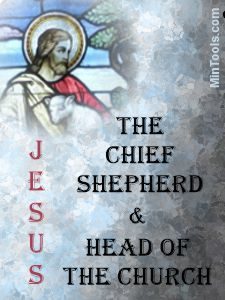
First Steps to Change Include Following the Chief Shepherd, Head of the CHurchChanges we make in the church must be more than the idea of an individual leader or leadership team. Jesus is the Chief Shepherd (1 Pet. 5:4) so we follow Him. We, as the entire Body of Christ, need to be following the direction of the Head of the Church.

And God placed all things under his feet and appointed him to be head over everything for the church, which is his body, the fullness of him who fills everything in every way. (Eph. 1:22-23)

… Christ is the head of the church, his body, of which he is the Savior. (Eph. 5:23)

And he is the head of the body, the church; he is the beginning and the firstborn from among the dead, so that in everything he might have the supremacy. (Col. 1:18)

So, first things first. Get on page with God, make sure leadership is onboard, and be sure to lay the groundwork with the rest of the Body. Then it will be time to start implementing change.

Also Check Out: Church Leaders & Change Management

Share:

Spirit & Truth in How We Worship

Share:

Jesus brought the perspective of spirit AND truth in how we worship in John 4. The Samaritan woman identified two different styles of worship, questioning which way was acceptable.

Samaritan Method of Worship: In John 4:22 Jesus said of the Samaritans, “You worship what you do not know.” They were limited in knowledge, accepting only the Pentateuch of the Old Testament. Their worship was enthusiastic but they lacked the proper knowledge. — “zeal without knowledge”

Jewish Method of Worship: They accepted the entire Old Testament and hence did not lack knowledge but their hearts weren’t in it. In Mark 7:6 Jesus used Isaiah’s words to describe them, “These people honor Me with their lips, but their hearts are far from Me.” — “knowledge without zeal”

God Seeks Spirit & Truth in How We Worship

Grace and Truth in How We Worship
(Click to enlarge image in Pinterest & repin.)

Jesus responded, “Yet a time is coming and has now come when the true worshipers will worship the Father in spirit and truth, for they are the kind of worshipers the Father seeks. God is spirit, and his worshipers must worship in spirit and in truth.” (Jn. 4:23-24)

The Father seeks both zeal and knowledge when we worship Him. He looks for fluidity of life and absoluteness of truth, enthusiasm and sound doctrine. It isn’t a matter of balance but rather BOTH spirit AND truth. We show our love for Him through worship with ALL of our heart, soul, mind, and strength (Lk. 10:27).

Why God Seeks BOTH Spirit AND Truth in Our Worship

Let’s remember why Jesus said we’re to worship in this way — “God is spirit” (Jn. 4:24). To truly connect with God in worship, we must approach Him on the basis of who He is.

To worship without spirit misses the personal reality, or essence, of His very being. Our spirit must connect with His spirit for God is not contained in a body like us. Consequently, true worship isn’t about where we worship. Nor is it about the means of worshiping. We worship from the heart so we don’t turn into the hypocrites Jesus spoke of, merely going through the motions, when He said, “These people honor me with their lips, but their hearts are far from me. They worship me in vain” (Matt. 15:8-9a)

To worship without truth leads to missing the awesome reality, or true God, He is. When we worship, we “ascribe to the LORD the glory due his name” and we “worship the LORD in the splendor of his holiness” (Ps. 29:2). When worship is void of truth, it will be anemic at best, if not a pure sham. How can we say we’re worshiping God if we aren’t acknowledging who He Himself says He is? We may be worshiping some semblance of a god but not the God of the Bible.

Are you worshiping in spirit AND truth?

Share: