Reasons We Don’t Pray

Share:

Reasons We Don't Pray When We're Exhorted to be Devoted to PrayerWe’re exhorted to be devoted to prayer (Col. 4:2), to pray on all occasions (Eph. 6:18), continually (1 Thess. 5:17), and to not give up (Lk. 18:1). Sometimes, however, we might struggle to remain consistent, wholehearted, and alert in prayer. As we already considered, we have good reasons to pray so it would seem reasons we don’t pray might be more symptomatic of something deeper.

Getting Below the Surface of Reasons We Don’t Pray

We might claim to be ignorant about what to pray and how to pray. Yet, God never made prayer complicated.

Trust in him at all times, you people; pour out your hearts to him, for God is our refuge. (Ps. 62:8)

We might think we’re too busy, too tired, and hence too distracted to pray and get anything out of it. Yet, these the times we most need His help.

Let us then approach God’s throne of grace with confidence, so that we may receive mercy and find grace to help us in our time of need. (Heb. 4:16)

… those who hope in (wait on) the LORD will renew their strength. They will soar on wings like eagles; they will run and not grow weary, they will walk and not be faint. (Isa. 40:31)

The prayer of a righteous person is powerful and effective. (James 5:16b)

Perhaps we’re angry or disappointed with God because of what He allowed into our lives even though we prayed. Yet, we humans don’t know better than a God who is holy and righteous, all-wise and sovereign, as well as gracious and loving.

As the heavens are higher than the earth, so are my ways higher than your ways and my thoughts than your thoughts. (Isa. 55:9)

Maybe we tried and tried and just couldn’t make ourselves pray consistently so gave up because it’s too hard. Yet, God never said it would be easy nor intended for us to “do” the Christian life through self-determination and self-striving.

Cease striving and know that I am God. (Ps. 46:10, NASB)

And pray in the Spirit on all occasions with all kinds of prayers and requests. (Eph. 6:18)

For More: Resources on Prayer

Share:

Reasons to Pray

Share:

We have many reasons to pray. — Why do you pray?

Is it because you need something? Jesus did say, “Ask and it will be given to you” (Matt. 7:7). Perhaps you pray because you find comfort in it. That makes sense since you’re praying to the “God of all comfort, who comforts us in all our troubles” (2 Cor. 1:3-4). Maybe you pray because it’s what Christians do. Even back to the Early New Testament Church, Christ-followers devoted themselves to prayer (Acts 2:42).

While we find biblical support for these reasons, some are more self-centered than God-centered. It could be that praying is more learned behavior than from the heart. So, what are some other biblical reasons for praying? What will provide us with the motivation to make prayer a continued priority?

Two Good Biblical Reasons to Pray

Commands: Praying is a matter of obedience to God. (Lk. 18:1; Phil. 4:6; 1 Thess. 5:17)

Duty alone might not keep us praying. If we’re out of fellowship with God, we’ll find it easier to disobey this command. And, if we do pray out of obligation, that is not going to solve the problem of keeping focused when we pray.

Commitment & Cooperation: Praying is a matter of an undivided heart toward God seeking to come into alignment with God. (Ps. 16:1-2; Acts 2:42; Rom. 12:12; Col. 4:2)

Devotion alone might make us want to pray and might put us on the right track to a better prayer life but won’t necessary bring life and energy into it.

The Best Reason for Praying

Communion: Praying is a matter of relationship with God. (Matt. 22:37-38; Jn. 15:5-7)

Delight in the One to whom we pray provides a motivation and passion to pray, and continue praying, that supersedes all other reasons to pray. When we pray because we delight in the Lord, duty and devotion are there but aren’t our main focus. HE is. When praying is about relationship, we enjoy communion with God so much that we keep praying even if we don’t get the responses we hoped to receive.

Resources:
Prayer Bits Devotion to Help You Pray
The Prayer Bits: Small Bits But Big Truths on Prayer Devotional Guide can help you go deeper into truths about prayer without taking a lot of study time.

Prayer Ministry Manual
The Prayer Ministry Manual can help you make prayer more of a priority in your own life as well as in your church or ministry.

Share:

Spirit & Truth in How We Worship

Share:

Jesus brought the perspective of spirit AND truth in how we worship in John 4. The Samaritan woman identified two different styles of worship, questioning which way was acceptable.

Samaritan Method of Worship: In John 4:22 Jesus said of the Samaritans, “You worship what you do not know.” They were limited in knowledge, accepting only the Pentateuch of the Old Testament. Their worship was enthusiastic but they lacked the proper knowledge. — “zeal without knowledge”

Jewish Method of Worship: They accepted the entire Old Testament and hence did not lack knowledge but their hearts weren’t in it. In Mark 7:6 Jesus used Isaiah’s words to describe them, “These people honor Me with their lips, but their hearts are far from Me.” — “knowledge without zeal”

God Seeks Spirit & Truth in How We Worship

Grace and Truth in How We Worship
(Click to enlarge image in Pinterest & repin.)

Jesus responded, “Yet a time is coming and has now come when the true worshipers will worship the Father in spirit and truth, for they are the kind of worshipers the Father seeks. God is spirit, and his worshipers must worship in spirit and in truth.” (Jn. 4:23-24)

The Father seeks both zeal and knowledge when we worship Him. He looks for fluidity of life and absoluteness of truth, enthusiasm and sound doctrine. It isn’t a matter of balance but rather BOTH spirit AND truth. We show our love for Him through worship with ALL of our heart, soul, mind, and strength (Lk. 10:27).

Why God Seeks BOTH Spirit AND Truth in Our Worship

Let’s remember why Jesus said we’re to worship in this way — “God is spirit” (Jn. 4:24). To truly connect with God in worship, we must approach Him on the basis of who He is.

To worship without spirit misses the personal reality, or essence, of His very being. Our spirit must connect with His spirit for God is not contained in a body like us. Consequently, true worship isn’t about where we worship. Nor is it about the means of worshiping. We worship from the heart so we don’t turn into the hypocrites Jesus spoke of, merely going through the motions, when He said, “These people honor me with their lips, but their hearts are far from me. They worship me in vain” (Matt. 15:8-9a)

To worship without truth leads to missing the awesome reality, or true God, He is. When we worship, we “ascribe to the LORD the glory due his name” and we “worship the LORD in the splendor of his holiness” (Ps. 29:2). When worship is void of truth, it will be anemic at best, if not a pure sham. How can we say we’re worshiping God if we aren’t acknowledging who He Himself says He is? We may be worshiping some semblance of a god but not the God of the Bible.

Are you worshiping in spirit AND truth?

Share:

Grace & Truth in How We Speak

Share:

So often we think we must achieve a balance of grace and truth in how we communicate — just enough truth, just enough grace. Not wanting to be at one extreme or the other, we look for balance. Or, perhaps we feel there are times for grace but other times we must primarily speak truth.

Grace & Truth Isn’t Really a Matter of Balance

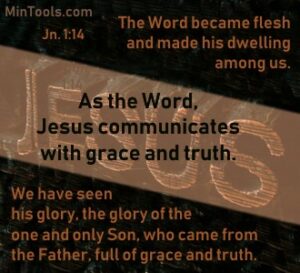
Jesus’ life shows us that grace and truth isn’t a matter of balance. He was 100% grace and 100% truth. He did not lay aside the one to become the other.
Grace & Truth in How We Speak When Christ-like

The Word became flesh and made his dwelling among us. We have seen his glory, the glory of the One and Only, who came from the Father, full of grace and truth. (Jn. 1:14 )

For the law was given by Moses, grace and truth came through Jesus Christ. (Jn. 1:17)

Consequently, exercising grace and truth in how we speak is Christ-like. (Resource: Christ-like Communication for Church Leaders)

The Defense for Both Grace AND Truth

“But they’re sinning,” you say. “Sometimes people just need to hear the truth.” You point to Scripture which clearly states that God uses truth to sanctify people (Jn. 17:17) and set them free (Jn. 8:32). And, we’re to stand firm “with the belt of truth buckled around your waist” (Eph. 6:14).

You would be right because truth is essential but so is grace. When people sin, they also need grace. The same grace that saves us “teaches us to say ‘No’ to ungodliness and worldly passions, and to live self-controlled, upright and godly lives in this present age” (Titus 2:11-12). We’re to stand firm in truth but we’re also to stand firm in grace (1 Pet. 5:12).

Scripture Exhorts Us to Speak with Both Grace and Truth

We are exhorted to speak the truth in love (Eph. 4:15). Notice that it doesn’t say “Show some love and then hit them with the truth.” Nor does it say “Speak the truth and follow it up with some love.” Both love (at the root of grace) and truth are to be present at the same time.

Grace AND Truth must be evidenced not only in the actual words we speak but also in attitudes and any resultant actions.

Brothers and sisters, if someone is caught in a sin, you who live by the Spirit should restore that person gently. But watch yourselves, or you also may be tempted. Carry each other’s burdens, and in this way you will fulfill the law of Christ. If anyone thinks they are something when they are not, they deceive themselves. (Gal. 6:1-3)

And the Lord’s servant must not be quarrelsome but must be kind to everyone, able to teach, not resentful. Opponents must be gently instructed, in the hope that God will grant them repentance leading them to a knowledge of the truth, and that they will come to their senses and escape from the trap of the devil, who has taken them captive to do his will. (2 Tim. 2:24-26)

Share:

Results of Making Worship a Priority

Share:

Let’s be real, we do experience personal, beneficial results of making worship a priority. But, when we make worship all about God, those aren’t the results we look for in worshiping Him. We become most concerned about how our worship benefits Him. Biblical worship is God-centered through and through.

3 Results of Making Worship a Priority

1) Honor and glory goes to the One who deserves it.

Those who sacrifice thank offerings honor me … (Ps. 50:23)

2) True worship leads to purified hearts yielded in service to God.

… I saw the Lord, high and exalted … “Woe to me!” I cried. “I am ruined! For I am a man of unclean lips, and I live among a people of unclean lips, and my eyes have seen the King, the LORD Almighty.” … And I said, “Here am I. Send me!” (Isa. 6:1-8)

3) A testimony for God is lived before unbelievers.

… He gave me the priestly duty of proclaiming the gospel of God, so that the Gentiles might become an offering acceptable to God, sanctified by the Holy Spirit. (Rom. 15:16)

Results of Making Worship a Priority in Church Purpose Ministry ManualThese results are listed in the Church Purpose Ministry Manual which views worship as a means of loving God with all our heart, soul, mind, and strength.

Learn More: Worship Resources

Share:

Results of Making Prayer a Priority

Share:

When we pray, we let God know that He and His will, are important to us. And, He lets us know how important we are to Him. He does that by allowing us to experience the following results of making prayer a priority.

3 Results of Making Prayer a Priority

1) God is near to us.

The LORD is near to all who call on him, to all who call on him in truth. (Ps. 145:18)

2) God helps us.

Let us then approach God’s throne of grace with confidence, so that we may receive mercy and find grace to help us in our time of need. (Heb. 4:16)

3) God protects us with His peace.

Do not be anxious about anything, but in every situation, by prayer and petition, with thanksgiving, present your requests to God. And the peace of God, which transcends all understanding, will guard your hearts and your minds in Christ Jesus. (Phil. 4:6-7)

Results of Making Prayer a Priority in Church Purpose Ministry ManualYou’ll find these results, plus two more, listed in the Church Purpose Ministry Manual which looks at prayer as one of the ways we fulfill our purpose to love God.

Learn More: Prayer Ministry Resources

Share: