Prayerlessness Because of What We Underestimate

Share:

In previous posts we’ve determined that for many prayerlessness probably isn’t due to ignorance or a perceived lack of benefits in praying. Why, then, don’t we pray more? Perhaps it’s because we fail to accurately or wholeheartedly grasp certain factors that will help us pray.

What We Might Underestimate that Leads to Prayerlessness

  • We might underestimate the work involved in praying.
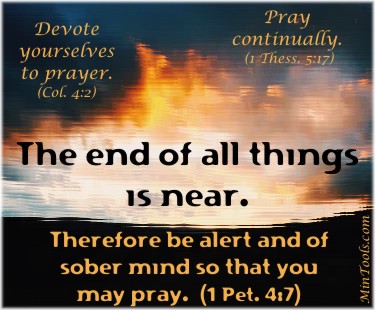
Don't Underestimate Need to Stay Alert for Prayer

The following Bible verses show how we need to be actively engaged when it comes to praying — alert, clear-minded, self-controlled, persevering. We can’t merely coast. We can’t be passive or lazy about praying. It’s too easy to lose focus or even fall asleep.

With this in mind, be alert and always keep on praying for all the Lord’s people. (Eph. 6:18)

Devote yourselves to prayer, being watchful and thankful. (Col. 4:2)

The end of all things is near. Therefore be alert and of sober mind so that you may pray. (1 Pet. 4:7)

  • We might underestimate the role of the Spirit in helping us pray.

We need to be consistently walking in the Spirit, depending on and yielding to His work in our lives. On our own we might lack the self-control we need to consistently pray but the fruit of the Spirit includes self-control and perseverance (Gal. 5:22-23). We might not know what to say or how to pray, but we have a Helper in the Holy Spirit.

And pray in the Spirit on all occasions with all kinds of prayers and requests. (Eph. 6:18)

In the same way, the Spirit helps us in our weakness. We do not know what we ought to pray for, but the Spirit himself intercedes for us through wordless groans. (Rom. 8:26)

  • We might underestimate the enemy and consequently don’t pull on God’s mighty power as needed.

God has a formidable foe who doesn’t want us praying. Satan knows the power of prayer. We must be aware of the devil’s lies and schemes to get us to doubt God hears or cares, to believe we’re too busy to pray, or that it doesn’t really matter. We must be proactive, putting on the armor God provides, resisting the devil, replacing his lies with truth.

Be alert and of sober mind. Your enemy the devil prowls around like a roaring lion looking for someone to devour. Resist him, standing firm in the faith … (1 Pet. 5:8-9)

Finally, be strong in the Lord and in his mighty power. Put on the full armor of God, so that you can take your stand against the devil’s schemes. For our struggle is not against flesh and blood, but against the rulers, against the authorities, against the powers of this dark world and against the spiritual forces of evil in the heavenly realms. … (Eph. 6:10-18)

When we underestimate any of the above factors, we will tend to find it harder to “pray continually” (1 Thess. 5:17) and to be devoted to prayer (Col. 4:2). But, prayerlessness can also result from what we overestimate.


Share:

Prayerlessness Due to a Lack of Benefits?

Share:

In the previous post we considered how for many Christians prayerlessness isn’t due to ignorance. We know we should pray, that God commands it. Could it be because we don’t think it’s beneficial?

Can We Really Claim Prayerlessness is Due to a Lack of Benefits?

If we don’t pray because we fail to see its value, or benefit, then we have to reconcile the following:

Prayerlessness Not Due to Lack of Benefits in Praying
(Click to enlarge image in Pinterest & repin.)

1) God’s Word clearly promotes the benefits of praying.

Read the following verses for just a few of the many specific benefits of praying we find in Scripture:

I sought the LORD, and he answered me; he delivered me from all my fears. (Ps. 34:4)

Do not be anxious about anything, but in every situation, by prayer and petition, with thanksgiving, present your requests to God. And the peace of God, which transcends all understanding, will guard your hearts and your minds in Christ Jesus. (Phil. 4:6-7)

If any of you lacks wisdom, you should ask God, who gives generously to all without finding fault, and it will be given to you. (James 1:5)

Therefore confess your sins to each other and pray for each other so that you may be healed. The prayer of a righteous person is powerful and effective. (James 5:16 … even more in verses 13-18)

Let us then with confidence draw near to the throne of grace, that we may receive mercy and find grace to help in time of need. (Heb. 4:16)

Some of the benefits will be outward demonstrations of God’s power and grace. Others, equally if not more potent, may be internal results affecting our heart attitudes and perspective. There’s definitely something beneficial about prayer if we have a God who keeps His promises.

2) Many believers testify of answers to prayers, attesting to the benefits of praying.

Read through the Psalms for the psalmist’s testimony of God responding to his cries. Listen to fellow believers who have personally experienced God not only hearing but responding to their prayers (Jn. 14:13; 1 Jn. 5:14). There must be something beneficial about prayer or these people are either liars or the exception.

3) Even non-believers seem to value people praying for them.

If nothing else, many non-believers derive comfort and encouragement, a blessing, when a Christian says they will pray for them. There must be something beneficial about prayer for that to happen.

Perhaps rather than claiming a lack of benefits in praying, we must admit our failure to tap into those benefits due to prayerlessness. Surely, then, there must be other reasons why we don’t pray. We’ll look further in the next couple of posts.

GO TO: More on Prayer

Share:

Prayerlessness Due to Ignorance?

Share:

To be sure, we live in a Bible illiterate world. Even many Christians lack a good or thorough knowledge of God’s Word. Yet, for many believers, prayerlessness is not due to ignorance. Most of us concur with the importance of prayer and the need to make it a priority. Even unbelievers tend to appreciate prayer offered on their behalf, particularly when going through crisis.

Prayerlessss Due to Ignorance of God’s Commands to Pray?

Verses like the following, written as commands rather than suggestions, exhort us to make prayer a constant priority in our lives:

God Commands Us to Pray, Prayerlessness not an OptionDevote yourselves to prayer. (Col. 4:2)

Pray continually. (1 Thess. 5:17)

Always keep on praying for all the saints. (Eph. 6:18)

Prayerlessss Due to Ignorance of what to pray?

Many Christians at least know what has come to be known as the Lord’s prayer in Luke 11:1-5, a pattern Jesus provided in response to the disciples’ request for Him to teach them to pray.

But, prayer really isn’t complicated. Simply “pour out your hearts to him, for God is our refuge” (Ps. 62:8). Jesus stressed how praying isn’t to be about the quantity of our words or eloquence in how we speak but merely being real with God (Matt. 6:1-8).

We don’t need a degree in theology to pray. We don’t have to be “spiritual giants” to pray. Even new believers who know very little about God and His Word can pray.

So, if for many or most of us, prayerlessness isn’t due to ignorance, then why don’t we pray? In the next three posts we’ll continue to respond to that question. Subscribe to receive e-mail notice of new posts.

Check out this Resource: Prayer Bits: Small Bits But Big Truths on Prayer Devotional

Share:

Prayer a Lifestyle? Praying Part of Your Church Culture?

Share:

Training Category: Prayer Ministry

To pray without ceasing (1 Thess. 5:17) is to make prayer a lifestyle or permanent practice in your life, a part of your church culture. To pray without ceasing is to pray at all times and for all things.

Pray without Ceasing - Lifestyle of Prayer

Setting aside times devoted to concentrated, undistracted prayer in our individual lives and as a church is very important. But, we also need to go through our daily lives attentive to God, consistently asking God His opinion and desires and always giving Him thanks.

To pray without ceasing is what has been called “practicing the presence of God” — always conscious of His presence, turning to Him as a constant companion, making no topic off limits with Him. Keep in mind that we do not need to pray for His presence in our lives. We have His promise that He is already there.

Effectiveness in Prayer Ministry Requires that it be a Permanent Practice

In calling people to prayer, we need to be careful that we are not making prayer come across as a passing fad or following the latest church movement. Prayer needs to be seen as the norm, as the expected response in any and all situations. When prayer is a pattern, we do not just come together for prayer in times of need or crisis. As seen in the example of the early church (Acts 2:42), we will be devoted to prayer wherein we promote a prayer environment and not merely a prayer meeting.

Ways to Model a Lifestyle of Prayer, to Make Praying a Part of Your Church Culture

  • In conversations, ask the person if you can pray with them right then about what was just shared. Soon you may see other pockets of prayer around the church as people follow your example.
  • When someone e-mails you with a prayer request, let them know that you will be praying for them as you send back your reply. You may even type out your prayer or part of it in the e-mail.
  • As you hear or watch the news, silently pray for the current events right then and there or ask those in the room to join with you in prayer.
  • In your sermons or teaching, refer to times when God led you to stop and pray as illustrations when appropriate. People may grab hold of that idea for their own lives.

In addition to this content, the Prayer Ministry Manual looks at what happens when prayer is more a matter of lifestyle, or a pattern, than a sporadic effort. You will also find an assessment using an acrostic of the word “devoted” as we need to be devoted to prayer if it is going to become a permanent practice.

For More on what will help you develop and maintain an effective Prayer Ministry, read the following:

For More About Praying: Resources for Prayer Ministry

Share:

Praying on God’s Terms, According to Biblical Principles?

Share:

Training Category: Prayer Ministry

Confidence Praying on God's Terms, According to His Will

Prayer was instituted by God as the means of communing with Him. He is the One who determined that prayer would be the way humans would work in cooperation with Him. Prayer is His idea, not ours. Consequently, it is only logical that we come to God on His terms, not ours.

Why Effective Prayer Ministry Adheres to Biblical Principles

  1. God will never contradict Himself in the way He answers prayer.
  2. God is not obligated to respond to prayer that violates His character or Word.

Consequently, the more we come to truly know God in the full essence of His being as depicted in Scripture, the more we will pray in ways that tap into His power.

How to Teach People to Pray on God’s Terms

When you teach on prayer, go beyond the mere commands and principles about praying to the basis for that command or principle in the character of God.

The fear of the Lord is the beginning of wisdom, and knowledge of the Holy One is understanding. (Prov. 9:10)

The fear of the Lord leads to life: Then one rests content untouched by trouble. (Prov. 19:23)

In addition to this content, the Prayer Ministry Manual considers how the fear of the Lord prevents us from living in violation of God’s character and Word and from expecting God to respond to our prayers in ways that contradicts Himself. You will also find a personal assessment for how well you adhere to God’s conditions for praying.

For More on what will help you develop and maintain an effective Prayer Ministry, read the following:

For More About Praying: Resources for Prayer Ministry

Share:

Right Purposes for a Prayer Ministry

Share:

Training Category: Prayer Ministry

If you want to develop a prayer ministry, personally or with a group, one of the first questions you must ask is “Why?” — What are you hoping to accomplish through it?

Effectiveness in Prayer Requires Having the Right Purposes for Praying

Devoted to Prayer
(Click to enlarge image in Pinterest & repin.)

Maybe you are hoping to see God take care of a list of requests.

You possibly want to see Him do great and mighty things in your midst or to bring revival.

Perhaps you simply want to be obedient to His command to pray.

Or, you may be trying to emulate the early church of the New Testament of whom it was said that they devoted themselves to prayer (Acts 2:42).

While all that and much more can happen as people meet together to pray, you will undoubtedly find a greater level of effectiveness when your purposes are centered more on God than on you. When prayer is about Him and not you, you tend to come to Him with the right heart attitudes. Your role, though important, isn’t primary. If you want people to be devoted to prayer, like the Early Church, you must be focused on the right purposes for having a prayer ministry.

Emphasize the following purposes and watch the difference it makes in your prayer ministry:

  1. Use prayer as a means of keeping focused on God.
  2. Use prayer as a means of acknowledging His grace in your life.
  3. Use prayer as a means of keeping His sovereignty in place in your life.
  4. Use prayer as a means of maintaining your relationship with Him.

Check out the Prayer Ministry Manual where you’ll find some thoughts on the above four points as to what heart attitude we need within each of these purposes and the role we have in it. You will also find a parallel of the above points to Jesus’ sample prayer in Matthew 6 (commonly known as The Lord’s Prayer). And, you will be guided in determining if you, as an individual, or as a prayer group, have the right purposes for praying.

For More on what will help you develop and maintain an effective Prayer Ministry, read the following:

For More About Praying: Resources for Prayer Ministry

Subscribe for E-mail notice of new posts.

Share: