Vacation Bible School? Choosing VBS Curriculum

Share:

Often you will find helps on which VBS curriculum to choose but not much seems to be written about when to choose it so let’s begin with that.

— WHEN TO CHOOSE VBS CURRICULUM —

Normally by the end of summer or beginning of autumn, most of the major curriculum companies announce the next year’s theme.  While you usually cannot order the material at that time, you can start comparing what is going to be available.

It used to be I would go to the local Christian bookstore when the curriculum was in stock and spend a number of hours checking out the various programs.  Now, with the Internet, you can do much of the research online and much earlier.

The earlier you begin the process, the more potential for your “creative juices” to start flowing to imagine the possibilities of what you could do with the various themes.

The earlier you decide, the sooner you can start praying more specifically and even dropping hints to build excitement.

— WHICH CURRICULUM TO CHOOSE —

In choosing VBS curriculum, pray for God’s guidance as you ask the following questions:

How does it meet the basics?

How does it fit our setting?

How will it interest our people?

How will it provide support for successful implementation of the program? 

You might not find a Vacation Bible School curriculum that aligns perfectly as a good fit for you in all these areas.  Make sure, however, that it at least measures up in the basics and then do your best to make it work in your setting, trusting God to use it to His glory.  Remember, the earlier you choose your curriculum the more time you will have to pray about it and tweak it to make it a better fit.

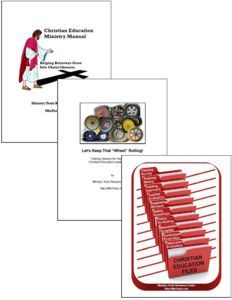
Vacation Bible School Ministry Manual
Get help answering these questions  about VBS curriculum with added input in the Vacation Bible School Ministry Manual. It also includes a two-page Curriculum Evaluation form you can use to assess various VBS curriculum publishers. This resource looks at six other pertinent steps to having an effective VBS.

For VBS Curriculum Currently Available: Vacation Bible School Curriculum & Theme Supplies
Share:

When VBS is Over, Then What?

Share:

The title of this post is inaccurate.  Vacation Bible School is never over.  Well, perhaps the actual program is, but the “follow-up” that ought to be taking place, keeps it going.  Various kinds of follow-up can be implemented to help make this year’s VBS even more spiritually successful as well as set the stage for the next VBS.  While everything is fresh in people’s mind, it’s time to start planning for the next year.

Follow-Up Ideas for When VBS is Over

The following ideas provide some broad suggestions for what you can do for follow-up. Specifics for implementing these suggestions depends on your setting but in some way could be a part of your plan.

  1. Take Home Follow-up
  2. Contact Follow-up
  3. Discipleship Follow-up
  4. Parent Follow-up
  5. Prayer Follow-up
  6. Report Follow-up
  7. Evaluation Follow-up
  8. Staff Follow-up
  9. Reunion Follow-up
  10. Outreach Follow-up
  11. Projecting Forward Follow-up

If your VBS program is long over and you haven’t done any follow-up, you can still implement some of these ideas.

More Help With Vacation Bible School

Vacation Bible School Ministry Manual
You’ll find brief input about each of the above means of VBS follow-up in the Vacation Bible School Ministry Manual. The resource looks at six other steps, in addition to follow-up, to having an effective VBS.

Share:

So Much to Do in Christian Education Ministries of the Church

Share:

Christian Education Bundle
When Christian Education ministries of the church are in full swing (i.e., Sunday School, small groups, children and youth ministries, and so much more), there’s a lot of work to be done and people must be recruited to do it.

Let me encourage you to think outside of the box when recruiting people to serve in Christian education.

(Check out the Christian Education Bundle for help with other areas of this important church ministry.)

Factors to Consider in Recruiting People to Christian Education Ministries

Spiritual Gifts:

  1. Recruit people who are gifted to do the job.  Don’t just seek to fill positions.
  2. Utilize a variety of spiritual gifts.  Don’t just look for people with the gifts of teaching and administration.  There is more to do in Christian education than teach and direct programs.
  3. Specialize the way you utilize people according to their gifting.  Don’t expect them to do that for which they are not gifted, at least not on a regular basis or as their primary ministry.

When you do this, you will discover that everybody can have a part regardless of gifting.  Rather than overworking the faithful few, making them do anything and everything, you can get a variety of people involved in ways that suit them, freeing up your teachers and administrators to do what they are gifted to do.

Heart Passions:

  1. Recruit people who have a heart for Christian nurture or discipleship.  Don’t minimize the importance of people being motivated by more than a love for God.
  2. Find a place for people who are impassioned for this kind of ministry or the various people groups regardless of their gifting.  Don’t turn people away or neglect to look at certain people because they lack typical gifting used in this kind of ministry.

When you do this, you will tend to have people serving who want to be there.  These are the people who will tend to give it their all, no matter how big or small of a task they do.

Commitments:

  1. Make sure people know what you are asking them to do and what is expected of them.  Don’t deceive them into thinking they are capable if they are not or that it will take less time or energy than it will.
  2. Limit their time commitments to what they agree to do.  Don’t make them feel guilty for failing to do that for which they were not recruited.

When you do this, you will be demonstrating a respect for people.  They will then be more likely to stick with their commitment and maybe even volunteer to go the extra mile.

Resources:

  1. Provide training, feedback, and encouragement.  Don’t abandon people once they start serving.
  2. Provide materials and finances needed to do the job.  Don’t expect them to invest what they don’t have or weren’t expecting to put out.

When you do this, you will be letting people know that just as you asked them for a commitment, so you are committed to them.  You will also be letting them know that you see them and what they are doing as important enough to invest into.  They too will begin to view their contribution as important and needed, no matter how big or small of a responsibility it may be.

Recruiting people to serve in the Christian Education Ministries of the church can be a challenge.  If you sow the above factors into your recruiting process, you will reap the reward of a more effective ministry.  It will have been worth the time and effort.

Share:

So You Want to Become a Christian Counselor!

Share:

Over the years I have received numerous e-mails asking the same question:  What must I do to become a Christian counselor?  I thought it would be well to provide my response for others who might have the same question.

Two Important First Steps to Becoming a Christian Counselor

As in any pursuit, here are two very important steps:

  1. Bathe it in prayer.  What is God’s desire for you? – “Trust in the Lord with all your heart and lean not on your own understanding; in all your ways acknowledge Him, and He will make your paths straight” (Prov. 3:5-6).
  1. As you are praying, learn as much as you can about it.  Sometimes the more you know, the more that passion grows.  But, sometimes the opposite happens.

Further Steps Dependent on the Direction You Go with Counseling

You also need to determine where you want to go with it, how you want to use it.  Do you want to become a professional counselor or do you want to do lay or peer counseling, perhaps as a ministry in your church?

This should become clearer as you invest prayer into it and gain a greater understanding of counseling.

The answer to that question will point you toward your next steps:

If lay counseling, a certificate program could be sufficient.  A good starting point could be the site of the AACC, the American  Association of Christian Counselors.   They have some courses that could be of great benefit to you.

If professional counseling, you will undoubtedly need to have a degree, probably even a Master’s Degree, to get licensed in your state.  Each state varies in their requirements and procedures so you should check with your state government with questions you have about state requirements.  It could be helpful to network with a Christian counselor or two in your area to learn from them what procedures they followed.

An example:  As of the writing of this post, Pennsylvania requires you have both a  bachelor’s and master’s degree to get licensed.  The Master’s degree must be 60 credits. You also have to do 3600 hours of supervised counseling and take and pass the National Counselor’s Exam. — Where you are located could be different.

If you do not get licensed, then you should be careful in calling yourself a counselor as with that can come liabilities.   People who are professional counselors usually purchase liability insurance.  Those who live in the United States can  get some ideas on that at the American Professional Agency.

 Some use the term “Biblical Life Coach.”

Some put it under the umbrella of discipleship.

At minimum, you should refer to your counseling as “lay counseling” and not just “counseling” so as to denote that you are not doing this as a professional.

Getting More Help Pursuing a Counseling Ministry

Here are some additional helps on the MinTools.com site:

Counseling Ministry Training – This is primarily for lay counseling, not professional counseling.

Counseling Ministry Resources – Most of these links will take you to other sites.

Also be sure to scroll down and read through the comments. Many of your question may be answered.

Share:

Children’s Ministry is Important

Share:

Children's Ministry is Important - They Matter to JesusWhile Jesus’ ministry when He lived on earth was primarily geared to adults, He did not ignore children. Children, as well as adults, need the touch of Jesus on their lives. God “wants all people to be saved and to come to a knowledge of the truth” (1 Tim. 2:4). When considering why children’s ministry is important, reflect on the following.

4 Reasons Children’s Ministry is Important

1)  Children are precious in Jesus’ sight.  He loves them!  He wants children to be brought to Him.

Let the little children come to me and do not hinder them for the kingdom of God belongs to such as these.  (Mk. 10:14)

2)  Children need help in learning how to navigate in today’s world … and they have so much of life ahead of them.

Faced with war, terrorism, divorce, crime and other anxieties, many children are feeling

  • . . . vulnerable – What if this happens to me?
  • . . . frightened – Where can I go to be safe?
  • . . . hopeless – Who is going to protect me?
  • . . . helpless – There’s nothing I can do to keep it from happening.

They need the touch of Jesus.  They need His help to cope and deal just as we adults do.  Jesus said, “Let the little children come.“

3)  Children are a part of today’s church, not merely the church of tomorrow.

They are just as much a part of the body as adults if they know Jesus as their Savior.  “The kingdom of God belongs to such as these.”

As you look at the Greatest Commandments and the Great Commission and  read passages about the church (Romans 12, 1 Corinthians 12, Ephesians 4), no one is excluded.  You will not find degrees to which this is to be happening based on age or any other criteria.

4)  Children need a Savior and are at a prime age to trust in Him.

According to a Barna report, “nearly half of all Americans who accept Jesus Christ as their savior do so before reaching the age of 13 (43%), and that two out of three born again Christians (64%) made that commitment to Christ before their 18th birthday.”

Based on these findings, childhood is a critical time to reach people for Jesus.  “Let the little children come!”

Ministry to children is important.  Whether you teach or help in any other capacity, you have a strategic role that goes beyond simply showing up and following a script.  You have a vital purpose.

Here are some resources to help you in your children’s ministry.

What are the practical implications of these four points for you?

Share:

The Greatest Gift a Father Can Give His Children

Share:
Father's Day Gifts
Click image to check out Gifts for Fathers at one of our affiliate stores.


When updating the Father’s Day Resources Page, I came across a couple quotes I’d like to pass along that leads to the greatest gift a father can give his children.

Quotes for Fathers Leading to the Greatest Gift a Father Can Give His Children

A Father’s Day bulletin and bookmark with the same message quotes Oswald Chambers:

“The destiny of every human being depends on his relationship to Jesus Christ. It is not on his relationship to life, or to his service or his usefulness, but simply and solely on his relationship to Jesus Christ.”

So often men tend to find their worth in achievements and how well they fulfill their roles or positions in life  … like fatherhood.  This quote emphasizes that what matters most is that you know Christ.  That leads me to the next message I came across on another bulletin and bookmark which only makes sense if the father has that relationship with Jesus.

“The greatest gift a father can give his children is to walk in the footsteps of God.”

The father’s example will leave a much greater impact on his children than words alone could ever do.  A Pass It On Card provides an acronym for what it will take:

D.A.D. – Dedicated And Devoted

When fathers are first and foremost dedicated and devoted to the Lord Jesus Christ they will be to their children what they should be.  What greater gift could a father give than to be an example of someone who knows and loves the Lord?

Share: