
What We Really Believe Matters

Share:

As He Thinks in His Heart so Is He - What do you believe? It matters.
What do we really believe about God, His Word, His Church, etc.? Very simply put, if we don’t believe certain truths, to the core of our being, we won’t tend to act on them. As a result, we won’t experience life in Christ in the fullness of what He intends to do in and through us. What we believe does matter!

Examples Showing How What We Really Believe Matters

To keep this post reasonable in length, we’ll only look at four areas which will give at least a sample of the difference our core beliefs make.

1) About the Bible

If we don’t hold firmly to the Truth of God’s Word, acknowledging it as inspired by Him and useful as our Standard for living (2 Tim. 3:16-17), it will affect how we approach reading and teaching it. For starters, we probably won’t invest what we should into Bible study or lesson preparation. And, when we aren’t Bible-based, we won’t see changed lives because “faith comes from hearing the message, and the message is heard through the word of Christ” (Rom. 10:17).

2) About the Holy Spirit

If we don’t truly believe the Holy Spirit is real and vital for today, then we won’t rely on Him for help (Gal. 5:14-26). Without His help, we won’t tend to navigate ministry, even life in general, as we should. As a result, we will bring on more problems than necessary or miss out on all God wants to do in and through us.

3) About Grace

If we don’t really acknowledge that the grace of God that saved us (Eph. 2:8-9) is what also enables us to live upright and godly lives (Col. 2:6; Titus 2:11-12), then we won’t rely on Him to work through us in all we do. As a result, we will never get to the point where we give God our best because self-effort will never get us there. We’ll tend take a more legalistic approach to living the Christian life or give up trying since we can’t be good enough.

4) About the Church

If we don’t think that God’s design for the Church works today, then we won’t place importance on functioning as a Body (1 Cor. 12). When that happens, we have little to fall back on when we disagree because Body life, God’s way, can not only help us resolve conflict but also prevent it. We won’t have people to hold us accountable and spur us on (Heb. 10:24).

If you struggle with any of the above, take time to at least read the posts under that area. You’ll also find a link for each to additional resources.

Share:

The Effects of Being Connected to One Another

Share:

Effects of Being Connected to One Another
God designed us as the Body of Christ to be members of one another (Rom. 12:5). As followers of Jesus Christ we are connected to each other in a special way. We have a unique bond with fellow believers all over this world because of Him. When we function as the Body God designed us to be we’ll fulfill His purposes and experience the effects of being connected to one another.

3 Effects of Being Connected to One Another

While we probably could list a number of ways we’re affected when we live as members of one another as God intends for the Body to function, here we’ll consider just three that can make a big difference not only to the health of the Church but also to our testimony in the world.

  1. Our connection in Christ should dictate how we communicate with one another. The many “one another” commands of Scripture serve as a guide.

“Therefore each of you must put off falsehood and speak truthfully to your neighbor, for we are all members of one body.” (Eph. 4:25)

For More, Read: Christ-like Communication (follow the links in that post)

  1. Being connected to one another should determine how we serve each other. We’re all in this Christian life together so its not about personal ambitions or self-fulfillment but rather truly caring about one another.

For More, Read: True Body Life Results in Ministry

“You, my brothers and sisters, were called to be free. But do not use your freedom to indulge the flesh; rather, serve one another humbly in love.” (Gal. 5:13)

  1. Our connection with one another in Christ should affect how we handle disagreements or conflict. Reconciliation should always be our goal which will happen when we focus less on “me” and more on “us”.

“Let the peace of Christ rule in your hearts, since as members of one body you were called to peace. And be thankful.” (Col. 3:15)

For More, Read: Harmony in the Midst of Conflict? (follow the links in that article)

When we live in accordance with God’s design for the Church, aware of the connection we have in and through Him as members of one another, the Church takes on a different dynamic. We aren’t just another organization trying to do good in this world. We are a living organism “joined and held together by every supporting ligament” finding our connection “from Him” who is the Head of the Church (Eph. 4:16).

Share:

What’s Important in Prayer

Share:

What's Important in Prayer to Keep Us Praying
Most Christians, even many non-Christians, acknowledge the importance of prayer, though they might not pray regularly and/or fervently. Many want to be prayer warriors but struggle to make it a priority. Perhaps what’s needed is an awareness of what’s important in prayer, not just the importance of praying.

What’s Important in Prayer That Will Keep Us Praying

One reason we might not pray regularly and/or fervently could be that we haven’t consistently experienced the power of prayer. We aren’t going to know how powerful praying can be if we fail to include some key elements in our attitude and approach to it.

1) importance of the heart, not just the mechanics of praying

James 5:16 makes it clear that its “the prayer of a righteous person is powerful and effective” because “the eyes of the Lord are on the righteous and his ears are attentive to their prayer” (1 Pet. 3:12). None of us are righteous in ourselves. When we put our trust in Jesus and what He did in dying on the cross for our sin, His righteousness was granted to us (Rom. 4:22-25) so when God looks at us He sees Christ’s righteousness. Positionally we are made right with God but practically we still sin and need to come back into fellowship with Him so our prayers aren’t impeded (Ps. 66:18). — “If we confess our sins, he is faithful and just and will forgive us our sins and purify us from all unrighteousness.” (1 Jn. 1:9)

2) importance of authenticity or truth, not just praying what we think God or others want to hear

Praying that’s about impressing usually stems from pride but praying that’s real grows out of humility and is that which God responds to (2 Chron. 7:14; Lk. 18:10-14). When we’re authentic, we often find ourselves pouring out our hearts in prayer (Ps. 62:8). That’s when we tend to be most aware of God’s presence as we pray. — “The LORD is near to all who call on him, to all who call on him in truth.” (Ps. 145:18)

3) importance of relationship, not just praying out of a sense of duty

While we do find many commands to not just pray but to devote ourselves to prayer (Rom. 12:12; Col. 4:2), praying continually and in everything (Eph. 6:18, Phil. 4:6, 1 Thess. 5:17), prayer needs to go beyond mere obedience. We will want to pray more and more when we approach prayer as a means of communing, or connecting, with our heavenly Father. We want to communicate with the One we love.

4) importance of gratitude, not just petitioning

Too often we make prayer about asking God for what we don’t have. What about thanking Him for what we do have? There must be a reason the command to “pray continually” is followed by “give thanks in all circumstances” (1 Thess. 5:18). There must be a reason the command to “devote yourselves to prayer” is coupled with “being watchful and thankful” (Col. 4:2). Too often we can get so consumed with how God may not be answering our prayers the way we expect that we fail to see how He is working on our behalf. If we don’t think prayer works, we’ll have little motivation to keep praying. When we watch for what God is doing, we’ll find ourselves praising and wanting to pray.

When the above elements increasingly become part of our praying, prayer becomes more than a tack on to the beginning or end of our day or church meeting. Prayer will not just be our last resort but rather our first response. Praying no longer will be an option but a necessity and no longer something we “ought to” do but rather “want to” do.

Check Out These Resources about Prayer:


Share:

The Uniqueness of the God of the Bible

Share:

If we study about the God of the Bible, we must conclude that He truly is unique. In His uniqueness He is incomparable … meaning no one is like Him. Be encouraged to take the time to read all the Scripture referenced in this post to gain a better grasp of the uniqueness of the God of the Bible.

Scripture Speaks of How God is Unique from Other Gods

Uniqueness of God - Who is Like the Lord?The Bible describes God as unique being majestic in holiness (Ex. 15:11; 1 Sam. 2:2), awesome in glory (Ex. 15:11), great and having a strong hand (Deut. 3:24), sovereign (2 Sam 7:22), and more.
We see it in His working of wonders and mighty acts (Ex. 15:11; Ps. 86:8-10). Other gods may have wonders attributed to them but the God of the Bible is known for doing the impossible with nothing being too hard for Him (Jer. 32:17; Mk. 14:36; Lk. 18:27). —  For what god is there in heaven or on earth who can do the deeds and mighty works you do? (Deut. 3:24)

We also see His uniqueness in the way He is identified as the first and last, therefore able to not just declare what happened but also what will occur in the future (Isa. 44:6-8; 46:9-11).

As the Maker of all things (Jer. 10:16), He is unique from all else and Sovereign above all. He is our Source, Sustenance, and Strength. We live to fulfill His purposes and not the other way around (Isa. 45:9; 46:9-11; Rom. 9:20-21).

Significance of Grasping the Uniqueness of the God of the Bible

If we say we believe in the God of the Bible then we must acclaim Him as unique for that is how Scripture describes Him. Reading the verses referenced above leaves no doubt of this declaration of uniqueness. When we truly grasp who He is, we’ll find ourselves proclaiming similar to the writers of the Bible that apart from Him there is no savior (Isa. 43:11, 13). Apart from Him we have no rock to stand upon (1 Sam. 2:2; Isa. 44:8). Nothing and no one compares to Him. Nothing and no one else deserves our full devotion and praise.

You’ll find this content in the introductory pages of the Our Great God from A to Z Discipleship Tool Download which looks at His attributes using the alphabet. Understanding who God is, as described in the Bible, should lead to this view of Him as unique from all other gods.

Learn More about God: Theology Resources

Share:

Bible Teaching That Communicates God’s Words

Share:

Bible Teaching That Communicates the Authoritative Word of God
Do you truly realize what happens when we teach Scripture?

In Bible teaching, we’re handling and sharing with others, the words of an Almighty God, the Creator of the universe, the Sustainer of life, the all-knowing, all-powerful, always wise and sovereign King of kings and Lord of lords.

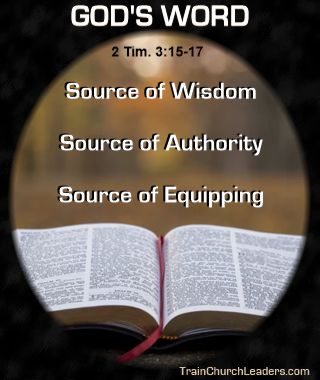
Scripture describes itself as penned by human writers, but “men spoke from God as they were carried along by the Holy Spirit” (2 Pet. 1:21). We also read that “all Scripture is God breathed” which makes it so useful to thoroughly equip us for every good deed (2 Tim. 3:16-17).

No other book has the same authoritative base because of its Author … an absolute standard to live by. No other book has as much power to change lives because of its Author … a relevant standard to live by. — What an awesome privilege and responsibility we have in teaching God’s Word to others.

Implications for Teachers and Leaders for Bible Teaching

Bible teachers, the first question to ask is if you truly believe this to be true. If so, you will then treat God’s Word as unique and more important than any other book. You will take great care to “rightly divide” it (2 Tim. 2:15) and then you will confidently and enthusiastically present a Lesson Worth Teaching.

Church leaders, you also need to ask if you truly believe in the Bible’s authoritative base. If so, you will see the importance of making Bible teachers training a priority to equip teachers to effectively teach the Word of God. (The TrainBibleTeachers.com site can help you think through this process.) Also, if you truly believe in the Bible’s authoritative base, you will seek to align what you say and do with Scripture. (The TrainChurchLeaders.com Practicum seeks to look at various leadership tasks and responsibilities through the grid of God’s Word.)

Share:

Motivation for Healthy Living

Share:

The beginning of a new year tends to be a time when people resolve to eat better and exercise more in the upcoming year. Often these plans begin well but dwindle in the months ahead. We lose our motivation for healthy living. Perhaps what’s missing is the scriptural foundation for wanting to be healthy. When our goal is to align with God’s desires for us, we’ll tend to maintain a more consistent motivation for healthy living. And, we’ll also tend to be more prone to pull on His power to get there rather than rely on a self-help plan based on a weight goal or number of steps on a tracker.

Scriptural Principles that Should Motivate Us Toward Healthy Living

These principles can guide us as individuals and help with motivation toward healthy living. They can also provide some insight into how we as a Church can help others pursue healthier living.

  1. God wants us to be good stewards of our bodies, treating them as “temples of the Holy Spirit” remembering that the whole of who we are belongs to Him, not just our spirits. Even the way we treat our bodies is a means of bringing glory to God. — Do you not know that your bodies are temples of the Holy Spirit, who is in you, whom you have received from God? You are not your own; you were bought at a price. Therefore honor God with your bodies. (1 Cor. 6:19-20)

As His Church, let’s encourage one another and provide training on how to be good stewards in all areas of our lives. We’ll tend to occasionally teach and/or preach on financial stewardship, maybe even time management, but what about taking care of our physical fitness?

For more: Biblical Stewardship Resources

Love Provides Motivation for Healthy Living

  1. God looks for a holistic response toward Him in accordance with how He made us with a body, mind, soul, and spirit. The greatest command is to “Love the Lord your God with all your heart and with all your soul and with all your mind and with all your strength” (Mk. 12:30).

And so, as His Church, let’s minister to the whole person, integrating physical, spiritual, emotional, mental, and social health and wellness. Let’s be understanding and sensitive to the needs of one another, not just the spiritual, knowing that when one aspect of our lives is hurting or unhealthy, it can affect other areas.

  1. Jesus came to this earth and died in our place so we can “have life, and have it to the full” (Jn. 10:10). Certainly that includes the whole of our lives here and now, not merely in our spirit or future heavenly abode. In the beginning of that verse, Jesus also said, “The thief comes only to steal and kill and destroy;”. When we don’t take care of ourselves, we can become our own enemy, robbing ourselves of the energy and drive to fully enjoy all He has for us.

As His Church, we can disciple people in how to experience that abundant life spiritually but also physically as is possible on this side of eternity. Let’s help people learn to prevent problems that could affect the rest of their being. Let’s mean it when we say we want people to become “fully” devoted followers of Jesus.

Share: